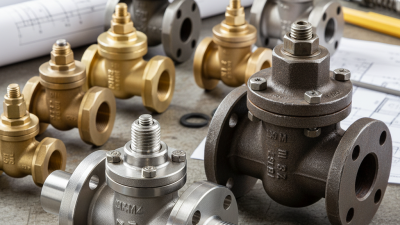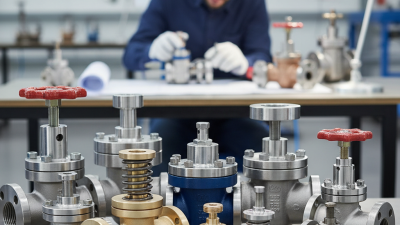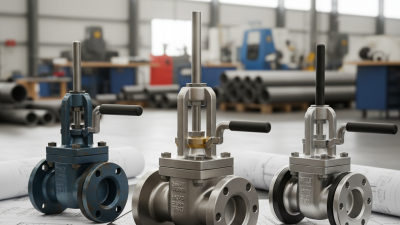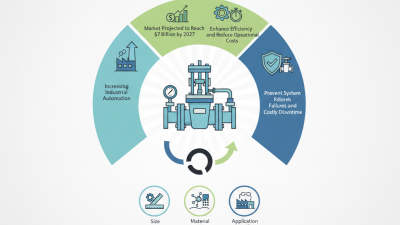
Looking for top Retaining Valve suppliers in China? Well, finding a reliable one isn’t just about scanning prices online. Sure, it’s tempting to go for the cheapest or prettiest option, but in reality, there’s so much more to consider. When you're dealing with valves, especially for critical stuff like water treatment, chemicals, oil, or industrial pipelines, it’s really about the details—like how accurate the design is, the quality of the materials, pressure ratings, testing methods, and whether they can deliver consistently. A valve might look sleek and perfect on your screen, but that sealing surface? That’s what usually tells the real story. And trust me, that tiny detail makes all the difference.
Greg Johnson, a well-respected guy in the valve industry and founder of United Valve, always says, “Valve selection should start with understanding your service conditions, not just picking from a catalog.” That’s a super important point because it nudges buyers to think about whether the media they’re working with is compatible, what temperature it can handle, how and where the valve will be installed, and how easy it is to maintain. Good manufacturers will be transparent—they’ll provide you with detailed drawings, inspection reports, material certificates, and clear info on performance. Traceability is key here; it’s all about trust.
Honestly, it’s the small things that build trust—or break it.
In this guide, I’ll walk you through what to look for when choosing a Retaining Valve supplier in China, focusing on practical stuff that really matters—like how experienced they are, the engineering support they offer, their ability to customize, export services, and quality controls. We’ll also go over how they handle samples, pressure tests, packaging, and after-sales. Sure, certifications can help boost your confidence, but don’t rely on them alone. It’s crucial to actually look into the factory, see their products firsthand, and maybe even test them yourself under real-world conditions. No supplier is perfect, and even the best-looking manufacturer might need a bit more technical scrutiny before you commit to a big order. The key is staying thorough and not taking everything at face value—that’s what this guide is all about.
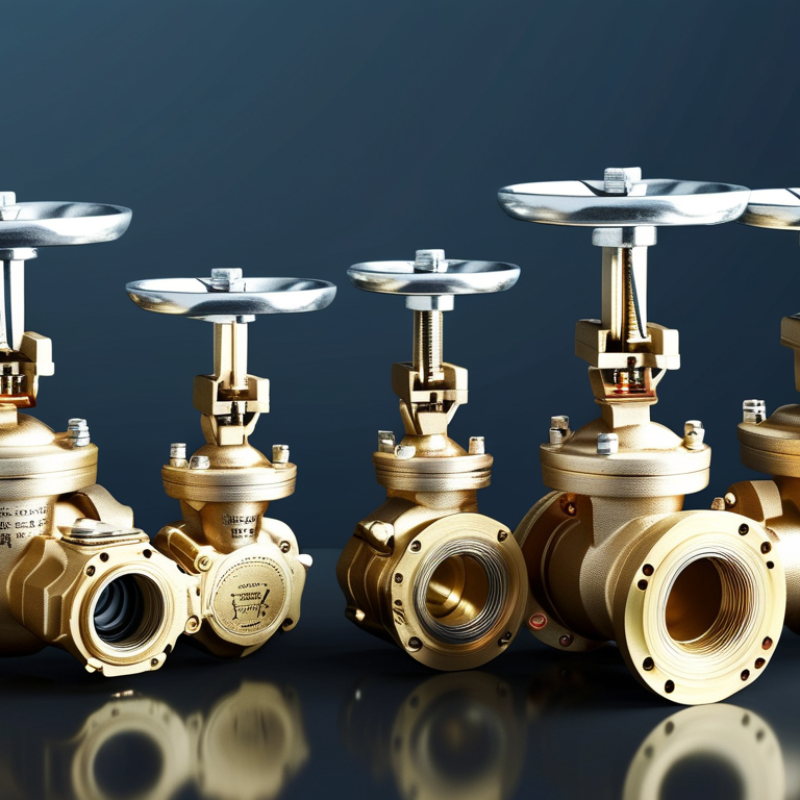
A Retaining Valve controls fluid movement and helps keep pressure from returning through a pipeline. In many industrial systems, it works like a check valve. Flow pushes the internal disc, ball, or piston open. Reverse pressure moves it closed. Simple principle.
When pressure falls, a spring or gravity can assist closure. Some designs close without a spring, using the disc’s weight and line position. The choice matters. A slow-closing valve may reduce water hammer, while a fast-closing model can protect compact equipment.
Inside the body, sealing surfaces must meet evenly. Small gaps can cause leakage, noise, and unstable pressure. Material selection depends on the medium, temperature, pressure, and corrosion risk. Stainless steel suits many demanding applications, but it is not automatically the best choice. Elastomer seals may improve shutoff, yet heat or chemicals can shorten their service life. Installation also affects performance. A Retaining Valve installed backward will not protect the line. Pipe debris can hold the disc open. Technicians should check the flow arrow, clean the pipeline, and leave enough access for inspection. That sounds obvious. It is still missed.
For global buyers comparing China-based suppliers, technical documents deserve close attention. Request pressure ratings, face-to-face dimensions, material certificates, test records, and a clear inspection procedure. Ask how each batch is tested for shell strength and seat leakage. Independent verification can add confidence. A valve may pass a factory test but fail under poor installation or repeated cycling. That gap deserves honest discussion before purchase.
A Retaining Valve, commonly called a check valve or non-return valve, allows fluid to move in one direction and automatically prevents reverse flow. The chart shows the nominal ASME B16.5 flange pressure classes commonly specified for flanged Retaining Valve assemblies.
ASME pressure classes are nominal flange rating categories, not universal valve operating-pressure limits. Actual allowable pressure depends on the valve design, body and trim materials, temperature, connection standard, and applicable product standard. Always verify the manufacturer’s pressure-temperature rating before selection.
Retaining Valves help control reverse flow, pressure loss, and fluid movement in demanding systems. Their correct type depends on the medium, temperature, pressure, and installation position. Spring-loaded Retaining Valves close quickly when flow reverses. They suit pump outlets, compressed-air lines, and compact process skids. A stainless-steel spring can improve corrosion resistance in damp utility rooms. Ball Retaining Valves use a guided ball to seal the passage. They work well with water, wastewater, and some low-viscosity fluids. However, suspended solids may prevent complete seating. Small errors matter.
Swing-type Retaining Valves allow a broad flow path and create relatively low pressure loss. They are commonly installed on large water pipelines, cooling circuits, and fire protection equipment. Wafer designs save space between flanges, which helps during retrofit projects. For pulsating flow, a damped or pilot-assisted Retaining Valve may reduce hammering. TheR215-7 Retaining Valve should be assessed against these operating conditions, not selected by code alone. Check the pressure class, connection standard, seal material, and maintenance access. A supplier with documented testing can provide pressure reports, material certificates, and traceable inspection records. Field experience also matters. A valve that looks suitable on paper can vibrate after installation. Rechecking flow direction and closing speed is worthwhile.
For global buyers, Retaining Valve suppliers should be judged by test evidence, not polished catalogs. A reliable supplier should state compliance with ISO 5208, API 598, or EN 12266, depending on the project. These standards define pressure testing, leakage limits, and inspection methods. Ask for test pressure, holding time, medium, and acceptance results. APc Valve with unclear test records is a technical risk.
Material control deserves equal attention. Suppliers should provide heat numbers, chemical analysis, mechanical results, and traceable inspection certificates. NACE IMPACT estimated that corrosion costs reached 2.5 trillion US dollars annually, equal to about 3.4% of global GDP. That figure makes material selection more than a purchasing detail. For seawater or chemical service, buyers should examine corrosion allowances, sealing materials, and coating procedures. A stainless body alone proves little.
Quality systems also need practical verification. The ISO Survey 2022 recorded more than one million ISO 9001 certificates worldwide, yet certification cannot replace product inspection. Buyers should review calibration records, nonconformance reports, and sample production files. Factory acceptance testing should include visual checks, dimensional measurements, and repeated opening cycles. Some suppliers provide excellent documents but weak process discipline. That gap is easy to miss. Independent inspection can expose it. Yet inspection plans are sometimes excessive, costly, and poorly matched to actual service conditions. Evaluation should remain evidence-based, service-specific, and technically honest.
| No. | Evaluation Area | Technical Dimension | Applicable Standard or Reference | Typical Buyer Acceptance Benchmark | Verification Evidence |
|---|---|---|---|---|---|
| 1 | Product Definition | Retaining valve operating principle | Project specification; applicable industrial valve standards | The supplier clearly identifies the valve type, flow direction, installation orientation, pressure rating, end connection and intended service. | Product datasheet, sectional drawing, operating manual and application limitations. |
| 2 | Design Compliance | Valve design, pressure-containing parts and rating consistency | ASME B16.34; API 6D where pipeline valve service applies | Design calculations and drawings match the ordered pressure class, nominal size, materials and connection configuration. | Approved drawings, design calculation summary and technical compliance statement. |
| 3 | Pressure Testing | Shell test, seat test and low-pressure closure test | API 598; ISO 5208; EN 12266-1 when specified | Every production valve is tested using a documented procedure, calibrated equipment and acceptance criteria stated in the purchase order. | Signed pressure-test reports, test procedure, calibration certificates and traceable valve serial numbers. |
| 4 | Pressure and Temperature Range | Rated pressure, design temperature and derating limits | ASME B16.34; ASME B16.5 or ASME B16.47 for applicable flanged connections | The supplier provides pressure-temperature tables for each body and trim material rather than using one rating for all conditions. | Pressure-temperature chart, material-specific rating table and design-condition confirmation. |
| 5 | Material Traceability | Body, cover, disc, hinge, spring, seat and fastener materials | ASTM material specifications; EN 10204 inspection documents | Pressure-retaining materials are traceable to heat numbers and correspond with the approved material specification. | Material certificates, heat-number records, positive material identification reports and material list. |
| 6 | Common Material Options | Carbon steel, stainless steel and corrosion-resistant trim selection | ASTM A216, ASTM A351, ASTM A105 and project material specifications | Material selection is based on fluid composition, temperature, pressure, corrosion risk and applicable process requirements. | Material selection worksheet, chemical compatibility statement and certified material records. |
| 7 | Sour-Service Capability | Resistance to hydrogen sulfide environments and hardness control | NACE MR0175/ISO 15156 for applicable oil and gas service | The supplier confirms compliance only when the fluid composition, partial pressure, temperature and material condition fall within the standard’s scope. | NACE compliance statement, hardness test results, heat-treatment records and material certificates. |
| 8 | Flow Performance | Cracking pressure, pressure loss and flow-direction stability | Project hydraulic specification; manufacturer performance data | The selected valve meets the required minimum flow rate, allowable pressure loss and reverse-flow prevention requirements. | Flow test data, pressure-loss curves, cracking-pressure data and sizing calculation. |
| 9 | Structural Integrity | Wall thickness, fatigue resistance, hinge or spring durability and vibration control | ASME B16.34; project mechanical-integrity requirements | The design addresses cyclic operation, water hammer, vibration, piping loads and the specified service life. | Finite-element analysis where required, cycle-test results, wall-thickness records and engineering calculations. |
| 10 | Dimensional Interchangeability | Face-to-face dimensions, flange drilling and end-to-end compatibility | ASME B16.5, ASME B16.47, ASME B16.10 or ISO 5752 as applicable | Critical dimensions conform to the purchase specification and are compatible with the buyer’s existing piping system. | Dimensional inspection report, certified drawing and flange or end-connection measurement records. |
| 11 | Manufacturing Quality Control | Incoming inspection, machining control, assembly inspection and final release | ISO 9001 quality-management principles | The supplier maintains documented inspection plans, nonconformance control, corrective action and final-release procedures. | Quality manual, inspection and test plan, process records, nonconformance reports and corrective-action records. |
| 12 | Non-Destructive Examination | Visual, magnetic-particle, liquid-penetrant, radiographic or ultrasonic inspection | ASTM E1444/E1444M, ASTM E1417/E1417M, ASTM E1742 and applicable project specifications | NDE methods and acceptance levels are defined according to casting, forging, weld-repair and service requirements. | NDE procedures, personnel qualifications, inspection reports and repair history. |
| 13 | Marking and Identification | Size, pressure class, material designation, flow arrow and traceability marking | ASME B16.34; API 6D marking requirements where applicable | Permanent markings are legible, consistent with the data sheet and linked to inspection and material records. | Nameplate photographs, marking layout, serial-number register and traceability map. |
| 14 | Certification and Documentation | Manufacturing record book and inspection dossier completeness | EN 10204; buyer quality-document requirements | The supplier can provide the agreed documentation package before shipment or within the contractual submission schedule. | Certificate index, material certificates, test reports, inspection release note and final data book. |
| 15 | Surface Protection | Coating system, corrosion protection and preservation for shipment | Project coating specification; ISO 12944 where applicable | Coating thickness, surface preparation, curing and packaging meet the environmental and transport conditions specified by the buyer. | Coating inspection report, dry-film-thickness records, preservation procedure and packaging checklist. |
| 16 | Environmental and Safety Management | Environmental controls, worker safety and production risk management | ISO 14001 and ISO 45001 certification frameworks | The supplier demonstrates controlled environmental and occupational-safety processes relevant to manufacturing activities. | Valid certificates, audit reports, environmental permits and safety-performance records. |
| 17 | Inspection and Audit Readiness | Pre-production review, witness points, hold points and factory acceptance testing | Buyer inspection plan; API 598 or ISO 5208 testing requirements | The supplier accepts agreed third-party or buyer inspections and provides advance notice for mandatory inspection stages. | Inspection and test plan, audit responses, factory acceptance records and release documentation. |
| 18 | Delivery and After-Sales Support | Lead time, spare parts, warranty handling and technical response | Purchase contract and project service-level requirements | The supplier provides a realistic manufacturing schedule, spare-parts list, installation guidance and a documented warranty process. | Production schedule, warranty terms, spare-parts recommendation, service procedure and response-time commitment. |
China’s retaining valve market includes factories with very different capabilities. Buyers should compare engineering depth, not catalog length. Ask whether the manufacturer understands your medium, pressure range, temperature, and installation position. A serious supplier should review drawings and identify possible failure points before quoting.
Request material certificates, dimensional reports, and pressure-test records. Check whether each valve receives individual testing or only batch inspection. For hydraulic applications, confirm sealing performance under vibration and repeated cycling. If your specification includes an Ls Valve, explain the load-sensing circuit clearly. The supplier should confirm port sizes, response requirements, and compatible control conditions.
A factory audit can reveal useful details. Look for calibrated test benches, clean assembly areas, marked components, and traceable production records. Ask for a sample built with the same materials and process as mass production. Pricing deserves attention, but an unusually low quote may hide weaker seals or limited inspection. Communication matters too. Can the technical team answer specific questions without vague promises?
Keep an agreed inspection plan in writing. Include tolerances, test pressure, packaging, and replacement procedures. Do not rely on certificates alone. They can be outdated or incomplete. A careful comparison may take longer than expected, and some buyer requirements may need revision after testing. That is normal. Specification mistakes are expensive.
Global buyers should assess retaining valve suppliers through documented quality systems, not attractive catalogs. During supplier audits, inspect incoming material controls, machining records, and final pressure-test reports. Each valve should carry a traceable batch number linked to material certificates, operator records, and inspection results. Small details matter.
For retaining valve assemblies, request hydrostatic and seat-leakage test data from every production lot. Confirm that gauges and test benches have current calibration records. Dimensional checks should cover thread accuracy, sealing surfaces, spring force, and body wall thickness. If the product is described as a Gun Valve, clarify its industrial application, media compatibility, and operating limits before approval. The name alone is not a technical specification.
Certification requirements vary by destination and service conditions. A supplier may provide ISO 9001 certification, but buyers should verify its scope and validity directly. Depending on the market, pressure equipment documentation, material standards, conformity declarations, or third-party inspection may also apply. Ask for controlled drawings and revision histories. Avoid certificates with missing serial numbers or unclear issuing bodies.
One audit lesson is uncomfortable: polished paperwork can hide weak batch control. No inspection plan is perfect. Buyers should sample finished valves independently, especially after tooling changes or supplier substitutions. A rejected sample is not failure; ignoring its cause is. Keep records of corrective actions, retesting, and delivery performance before approving long-term orders.
Export performance depends on more than a competitive quotation. I review pressure ratings, body materials, sealing systems, and test records before comparing suppliers. Clear technical drawings reduce mistakes during installation and replacement. Suppliers should provide certificates, inspection reports, packing photos, and accurate shipping documents. These details matter when valves travel through humid ports or long inland routes.
Customization is useful when standard dimensions do not match existing pipelines. A reliable factory can adjust connections, coatings, spring settings, and seal materials. However, every change needs written approval and a revised drawing. I have seen buyers accept verbal promises, then face costly corrections. That process is avoidable. Ask for sample validation, production tolerances, and a defined inspection plan before payment. Export experience also includes realistic lead times and suitable packaging for heavy valve assemblies.
After-sales support often separates a dependable supplier from a temporary seller. Request installation instructions, troubleshooting charts, spare seals, and replacement-part availability. A practical supplier should identify a technical contact and state response times clearly. Remote support may include photos, videos, and pressure-test guidance. On-site service is not always available, so buyers should confirm this early. Even strong suppliers can miss small details. Regular communication and documented feedback help improve future orders.
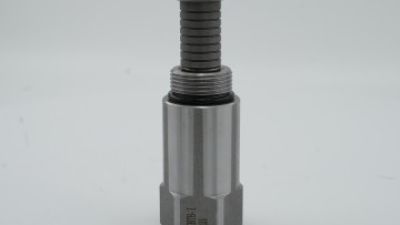
The EC210 Back Pressure Valve is designed for precision flow control in demanding industrial and heavy-equipment hydraulic systems. By helping maintain controlled back pressure, it supports stable fluid movement and contributes to consistent system performance during operation. Its practical design makes it a suitable replacement component for compatible equipment requiring dependable pressure management, reliable fitment, and steady hydraulic control.
Identified by part number KYBTB-I-021, this valve is supplied new and manufactured to a high-quality standard. It is available in neutral packaging or protective supplier packaging, supporting safe handling during storage and transportation. With shipment options including sea, air, and express delivery, the component can be arranged according to project schedules and logistics requirements. Produced in China, the EC210 Back Pressure Valve offers a practical solution for maintenance, repair, and replacement applications where precision flow control is essential.
: Consider the fluid, temperature, pressure, flow direction, and installation position. Connection size and maintenance access also matter. A valve suitable on paper may vibrate after installation.
They close quickly when flow reverses. They suit pump outlets, compressed-air lines, and compact process skids. Stainless-steel springs can resist damp-room corrosion.
Ball designs work well with water, wastewater, and some low-viscosity fluids. Suspended solids may stop the ball from seating completely. Small errors matter.
Their broad flow path usually creates relatively low pressure loss. They fit large water pipelines, cooling circuits, and fire protection equipment. Check their closing behavior carefully.
Wafer valves save space between flanges. This can simplify retrofit work in crowded pipe rooms. Confirm flange compatibility before ordering.
Compare engineering ability, testing practices, and technical communication. Do not judge factories by catalog size alone. Ask whether engineers review your drawings and operating conditions.
Request material certificates, dimensional reports, pressure-test records, and inspection results. Confirm whether every valve receives individual testing. Certificates alone are not enough.
Look for calibrated test benches, clean assembly areas, marked components, and traceable records. Request a sample made with production-equivalent materials and processes. Details reveal weaknesses.
Record tolerances, test pressure, packaging, and replacement procedures in the purchase agreement. Recheck flow direction, sealing, vibration, and closing speed after installation. Requirements may need revision.
This guide explains what a Retaining Valve is, how it controls fluid movement, and why it is important in systems that require reliable flow direction and backflow prevention. It introduces major valve types suited to applications such as water treatment, chemical processing, oil and gas, power generation, and general industrial equipment. Readers will also learn how technical factors—including pressure ratings, temperature ranges, materials, sealing performance, durability, and testing procedures—can be used to evaluate potential suppliers.
The article also presents practical methods for comparing China’s retaining valve manufacturers, including production capabilities, engineering experience, quality management, inspection systems, and relevant certifications. For global buyers, it highlights the importance of traceability, product documentation, export experience, packaging, customization support, spare parts availability, warranty terms, and responsive after-sales service. By considering both technical performance and supplier reliability, buyers can make more informed sourcing decisions and select products that meet their operational requirements and applicable international standards.