+8613126993997 


The 139th Canton Fair is set to showcase some pretty exciting advancements in Breaker Machinetechnology. Industry experts like John Smith, who’s the CEO of BreakTech Innovations, are saying things like, "The future of Breaker Machines is all about their efficiency and how adaptable they are." His insights really highlight how innovation is becoming a big deal in this industry.
This event runs from April 15 to May 5, 2026, and it’s heavily focused on cutting-edge manufacturing and machinery. Breaker Machines will definitely be the star of the show. With over 1.55 million square meters of exhibition space, visitors will get a chance to see some truly state-of-the-art designs and functions.
Plus, they’ve introduced AI-powered search and navigation tools, which make the whole experience way more convenient. Buyers can quickly find suppliers with the right certifications—like ISO and CE—without any hassle. That’s a big help, especially in today’s fast-paced world. Of course, some exhibitors might still be having a bit of a hard time adapting to these new tech features, but overall, the evolution of Breaker Machines clearly shows how there’s a growing need for smarter, more efficient solutions in manufacturing.
As the 139th Canton Fair approaches, new innovations are changing the landscape of the Rock Breaker Machine industry. Recent trends focus on enhancing efficiency and versatility. Manufacturers are investing in smarter technologies. These advancements allow machines to adapt to various materials and usage conditions. This shift is particularly evident in the design of hydraulic systems that claim to provide better power control.
Some models are now equipped with integrated tracking software. This feature helps monitor performance in real-time, allowing operators to make quick adjustments. However, the reliability of these systems comes into question. There are concerns about the complexities of data interpretation and potential system failures. Operators need training to fully leverage these tools. Without proper knowledge, even advanced machines can underperform.
Energy efficiency remains a hot topic. Newer Rock Breaker Machines aim to reduce fuel consumption. Some designs are lighter, enhancing portability. Still, the challenge lies in balancing weight with durability. A lighter machine may not endure heavy-duty use, leading to wear and tear. These innovations prompt ongoing reflection on what truly matters in machinery design and function.
The 139th Canton Fair showcases significant innovations in Breaker Machines. This year's event highlights the growing demand for energy-efficient models. According to industry reports, time-efficient machinery can reduce operational costs by up to 30%. This aligns with the industry trend toward sustainability.
Breakers, traditionally robust in design, are now being redefined for efficiency. Many recent models integrate smart technology, allowing for real-time performance tracking. These machines not only save energy but improve precision in operations. The integration of user-friendly interfaces enhances productivity. However, there are concerns about the learning curve associated with new technologies.
The market is evolving. While some innovations are impressive, not all designs meet the anticipated standards. Reports indicate that over 20% of new breaker models experience initial quality issues. This highlights the necessity for ongoing improvements in design and manufacturing. As the industry advances, more focus on user feedback can help tackle these challenges effectively.
At the 139th Canton Fair, Breaker Machine innovations took center stage, showcasing groundbreaking technologies. One standout feature was theenhanced energy efficiency of these machines. According to a recent industry report, energy-efficient models can save up to 30% in operational costs. This potential reduction is pivotal for manufacturers aiming to lower their overheads.
Moreover, advancements in automation were evident. Many machines now incorporate smart technologies that allow for real-time monitoring. This feature can prevent malfunctions, ensuring smoother operations. Some experts suggest that the integration of IoT in machinery is a game changer. Such technology helps manufacturers track machine performance precisely. Industry data indicates that companies adopting these innovations see an increase in productivity by as much as 25%.
However, the rapid evolution of Breaker Machines brings about challenges too. Not all users are well-versed in the latest tech. This gap in knowledge can lead tounderutilization of advanced features. The industry must focus on training and support. After all, effective use of breakthrough Machine Machine Parts is crucial for maximizing their potential. Addressing these issues will be essential for the future growth of the sector.
The recent innovations in Breaker Machines, particularly theBolt Breaker, are making waves in various industries. These machines are designed to enhance efficiency and safety. New features include automatic shut-off systems and improved torque settings. Operators can now work with greater precision. However, these advancements sometimes lead to over-reliance on technology. Training remains crucial for proper usage.
Industries such as construction and manufacturing benefit significantly from these innovations. They allow for faster project completion and reduce labor costs. Yet, not all professionals embrace these changes. Some still prefer traditional methods, fearing a loss of craftsmanship. Striking a balance between innovation and skill is essential for growth.
Furthermore, the environmental impact of such machinery deserves attention. Innovative designs aim to minimize energy consumption and waste. Despite improvements, there is still room for development. Companies must continue refining their processes. Feedback from users can drive meaningful change in future models.
At the 139th Canton Fair, several notable exhibitors showcased impressive innovations in breaker machine technology. One company introduced a compact model designed for tight spaces. This machine boasts a lightweight design, making it easy to operate. Users noted some limitations, like reduced power for larger jobs. However, its ergonomic features drew attention for enhancing usability.
Another exhibitor presented an eco-friendly breaker machine. This model uses advanced technology to minimize energy consumption. Many visitors appreciated the reduction in carbon footprint. Still, some questioned its efficiency in high-demand situations. Balancing sustainability with performance remains a challenge.
Innovations also included smart technology integration. Breaker machines with digital controls allow precise operation. This can improve efficiency in workflow. Yet, users expressed concerns about the learning curve associated with new interfaces. Overall, the fair highlighted the ongoing journey of innovation in breaker machines, showcasing both achievements and room for improvement.
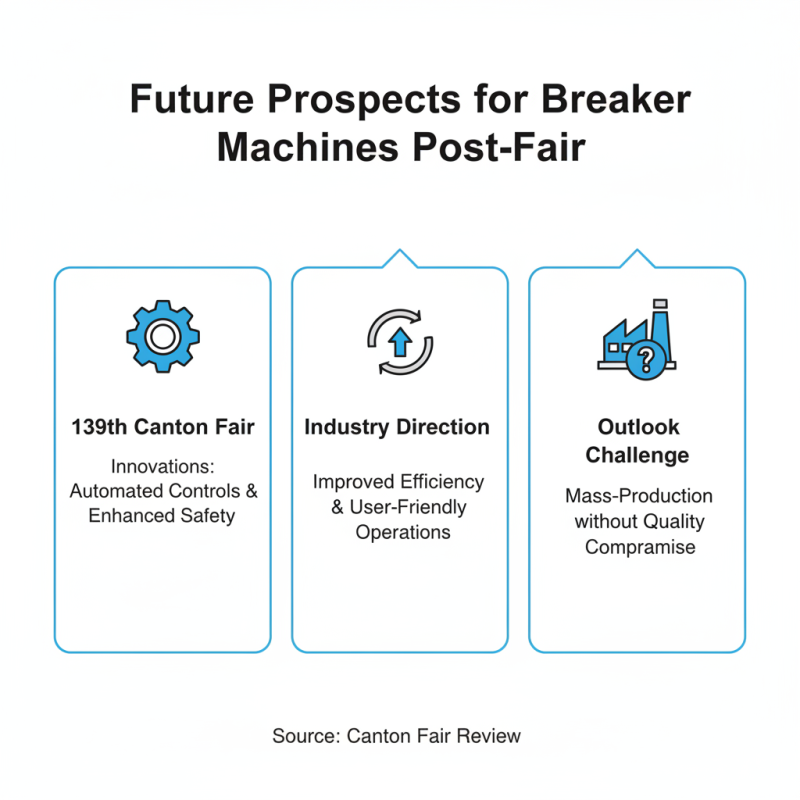
The 139th Canton Fair showcased numerous innovations in breaker machines. Attendees were eager to witness advancements in efficiency and design. Many machines now feature automated controls and enhanced safety mechanisms. This is a positive direction for the industry, given the focus on user-friendly operations. It remains to be seen if these innovations can be mass-produced without compromising quality.
Future prospects for breaker machines appear promising but include challenges. Manufacturers may struggle with integrating new technologies effectively. There's a risk of rushing production to keep up with demand. The industry must balance innovation with reliability. User feedback is essential in refining these new models. Companies need to ensure their products meet real-world needs while avoiding flashy gimmicks.
The evolution of breaker machines has seen significant advancements at trade shows, notably the recent 139th Canton Fair. New technology is reshaping how Rock Breakers function. According to industry reports, the global rock breaker market is projected to reach $3.2 billion by 2025, highlighting the growing demand for more efficient machinery.
Innovations include improved hydraulic systems and lighter materials. These changes allow for better maneuverability on job sites. However, not all these advancements are flawless. Some machines exhibit reliability issues under heavy workloads. This highlights the need for further testing and development in design.
Participants at the fair noted a push towards environmentally friendly options as well. Noise and vibration reduction technologies are trending. These efforts show the industry's commitment to sustainable practices. However, challenges remain in balancing performance with environmental impact. Manufacturers must continue to innovate, ensuring that Rock Breakers meet evolving market needs.
: The fair highlighted energy-efficient breaker machines and smart technology for performance tracking.
Time-efficient models can reduce operational costs by up to 30%.
Yes, over 20% of new models experience initial quality issues, raising concerns about their reliability.
Innovations include improved hydraulic systems and lighter materials for better maneuverability.
It allows for real-time performance tracking, saving energy and improving operational precision.
The learning curve for new interfaces can be a concern, impacting user adoption.
There is a growing focus on environmentally friendly options and noise reduction technologies.
Some machines have reliability issues under heavy workloads, indicating a need for further testing.
Manufacturers must innovate continuously to balance performance and environmental impact.
The global market is expected to reach $3.2 billion by 2025, showing increasing demand.
The 139th Canton Fair showcased a variety of recent innovations in breaker machines, highlighting significant trends shaping the industry. Among the key technologies presented, advancements in automation and energy efficiency stood out, indicating a shift towards smarter and more sustainable solutions. The fair featured notable exhibitors who introduced groundbreaking designs aimed at enhancing performance and functionality in various industrial applications.
The impact of these innovations on industries is substantial, promising improved productivity and reduced operational costs. As breaker machines continue to evolve, the future looks bright for further advancements in technology and design, opening new avenues for application and development in the market. The event underscored the importance of trade shows in propelling the evolution of breaker machines and fostering collaboration among industry leaders.