Picking out the right Hydraulic Pump Partsisn’t just about browsing through a catalog — it’s more of a practical engineering choice. Yeah, a pump might technically fit into the housing, but that doesn’t mean it’ll perform well under heat, contamination, or those pesky pressure spikes that happen all the time. According to MarketsandMarkets, the global market for Hydraulic Pumps is expected to grow from about USD 10.8 billion in 2022 to roughly USD 14.1 billion by 2027. And experts like Grand View Research also point out that construction, agriculture, and industrial machinery are big demand sectors. All these numbers show a pretty strong growth trend, but they don’t mean that any old component will do the job perfectly — compatibility still matters.
Dr. Noah D. Manring, who wrote the book Hydraulic Control Systems, puts it simply but wisely: “A pump should be selected for the system, not the other way around.” Sounds obvious, right? But it actually changes how you approach the whole process. First off, you want to start by looking at things like displacement, rated pressure, rotation direction, shaft size, port dimensions, fluid viscosity, and operating temperature. After that, it’s worth checking contamination control and seal materials, too. Sometimes, a lower price could mean a cheaper part, but a worn piston shoe, scored Valve Plate, or hardened seal can quietly drag down efficiency before any obvious failure pops up. Those tiny details really do matter.
That said, guides or charts can only go so far because real-world machines and conditions are often more complicated. Different environments, regional manufacturing differences, or updates in parts can throw a wrench in things. So, it’s always a smart move to verify the original part number with the manufacturer’s manual, double-check tolerances with the OEM, and if you’re unsure, chat with a qualified hydraulic tech. The “best” Hydraulic Pump Parts aren’t necessarily the newest or cheapest ones — they’re the ones that match your entire system, stand up to real working conditions, and are traceable after installation. Honestly, it’s pretty common to overlook that last part, but trust me, it’s a mistake you don’t want to make.
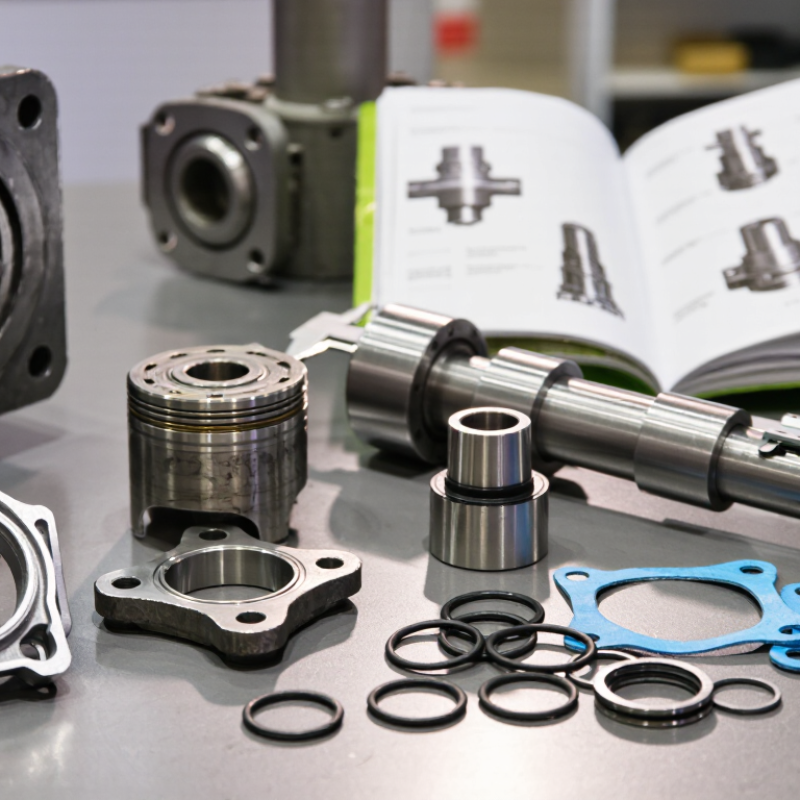
Identify the Hydraulic Pump Type and Operating Requirements
Choosing the right Hydraulic Pump parts starts with identifying the pump type. Gear, vane, piston, and screw pumpsbehave differently under load. A Gear Pump suits steady flow and moderate pressure. A piston pump handles higher pressure, but demands cleaner oil and tighter contamination control. Check the machine manual, shaft direction, displacement, mounting pattern, and port size before ordering anything.
Operating requirements matter more than catalog appearance. Record working pressure, peak pressure, flow rate, speed, oil viscosity, temperature, and duty cycle. The U.S. Department of Energy notes that pumping systems can consume 20% to 50% of industrial electricity in some facilities. Efficiency is not a minor detail. A slightly oversized pump may create heat, noise, and wasted power. The DOE Pumping System Assessment Tool also uses flow, pressure, speed, and efficiency as key assessment inputs.
I have seen technicians replace a worn seal without checking shaft alignment. The leak returned within days. It was an expensive lesson. Use ISO 4406 cleanliness datawhen selecting filters and replacement parts. Confirm material compatibility with the actual fluid, especially around seals and hoses. Allow for cold-start viscosity, pressure spikes, and dusty surroundings. A part can fit perfectly and still fail early. That is the uncomfortable part. Industry research from Grand View Research estimates continued growth in Hydraulic Pump demand, but market growth does not remove the need for site-specific measurements.Record real readings, not guesses.
Check Pump Specifications, Part Numbers, and Compatibility
Choosing the right Hydraulic Oil Pump parts starts with exact specifications, not appearance. Record displacement, pressure rating, shaft type, rotation, mounting pattern, and fluid requirements. A pump may fit the housing but fail under real pressure. Check the original part number against the supplier’s technical drawing. One missing suffix can indicate a different seal material or port arrangement.
The U.S. Department of Energy’s Pumping System Sourcebook identifies energy-saving opportunities of 20–50% in optimized pumping systems. Correct parts support that efficiency by reducing leakage, friction, and pressure loss. Inspect the oil condition too. ISO 4406 cleanliness codes help compare contamination levels before installing sensitive components. I once treated a similar-looking coupling as interchangeable. That shortcut was wrong. The shaft length differed by only a few millimeters, but alignment became unstable. Small differences matter.
Confirm compatibility with the hydraulic oil, operating temperature, duty cycle, and control system. Review pressure and flow together, rather than selecting by maximum pressure alone. The National Fluid Power Association’s industry data continues to show demand across both mobile and industrial equipment, where replacement conditions vary sharply. Ask for dimensional drawings, test records, and material details. Keep photographs of the removed part beside the new one. It makes errors easier to catch. Recheck everything.
Evaluate Material Quality and Manufacturing Standards
How to Choose the Right Hydraulic Pump Parts?
Material quality and manufacturing standards directly affect a Hydraulic Pump’s service life. A reliable Hydraulic Pump Kit should use materials selected for pressure, temperature, and fluid compatibility. Hardened steel often suits gears and shafts exposed to repeated loads. Seals need controlled elasticity and resistance to swelling. Cheap materials may look acceptable during installation. Problems appear later.
Ask for material certificates, heat-treatment records, and dimensional inspection reports. These documents provide useful evidence, not absolute proof. A serious manufacturer should maintain traceability from raw material to finished part. Check whether critical surfaces receive accurate grinding or honing. Small scoring marks can increase leakage and reduce volumetric efficiency.
Manufacturing standards matter as much as material choice. Look for documented quality systems, consistent inspection procedures, and calibrated measuring equipment. Tolerances should match the pump’s original engineering requirements. A random replacement part may fit physically but perform poorly under load. I have seen clean-looking components fail because an internal clearance was overlooked. That mistake is easy to repeat.
Inspect the part before installation. Measure shaft diameter, gear width, bore condition, and seal seating areas. Compare the readings with verified technical data. Also examine packaging for moisture, dust, or impact damage. Standards create discipline, but careful human inspection still matters. Choose parts supported by clear specifications, traceable production records, and realistic performance testing.
Match Parts to System Pressure, Flow, and Temperature
How to Choose the Right Hydraulic Pump Parts?
Match Parts to System Pressure, Flow, and Temperature
Choosing hydraulic pump parts starts with the system’s actual pressure, flow, and temperature. Do not rely only on catalog ratings. Measure working pressure near the pump outlet, including pressure spikes during startup. A part rated for average pressure may fail under repeated peaks. Match the replacement shaft, bearings, and housing to the pump’s displacement and speed. Small dimensional errors can create noise, heat, or internal leakage. Field experience matters here. A clean measurement often beats a confident guess.
Flow requirements deserve equal attention. Check required liters per minute at operating speed, not just maximum advertised flow. An undersized inlet fitting can starve the pump and cause cavitation. You may hear a rough, gravel-like sound before damage appears. Select hoses, couplings, and valves that support the required flow without excessive restriction. Pressure losses should be calculated, though real installations often differ from drawings. That gap deserves investigation. Good engineering is sometimes a correction process.
Temperature changes the choice of seals, fluids, hoses, and bearings. Record cold-start and peak operating temperatures during a normal shift. A seal that performs well at room temperature may harden beside a hot manifold. Check fluid compatibility, viscosity range, and contamination control before installation. Replace filters when needed. Do not assume a new part fixes an old problem. Verify alignment, flushing, and torque with documented procedures. Leave room for doubt. Recheck performance after several operating hours, because early readings can look acceptable while wear is already developing.
Verify Dimensions, Seals, Connections, and Installation Details
Choosing the right hydraulic pump parts starts with accurate measurements, not assumptions. In field inspections, I have seen a pump fail because a replacement gear was only two millimeters wider. Record shaft diameter, gear width, mounting-hole spacing, and rotation direction. Compare each figure with the service manual and the removed part. A Hydraulic Gear Pump may look identical while using a different displacement or shaft profile.
Seals need equal attention. Check the seal material, inner diameter, thickness, and temperature range. A seal can fit the groove yet fail when fluid pressure rises. Inspect the housing for scratches near the sealing edge. Even a small cut can create a slow leak. Replace flattened O-rings instead of reusing them. This is not expensive insurance.
Connections must match precisely. Verify port size, thread type, inlet position, and outlet direction. Do not force a metric fitting into a tapered thread. It may tighten briefly and still leak under vibration. Before installation, flush hoses, remove metal particles, and fill the pump with clean hydraulic fluid. Keep the pump level while tightening fasteners in a cross pattern. I once overlooked a blocked suction strainer during a rushed repair. The installation looked correct, but the pump cavitated within minutes. Check alignment again before startup, because “close enough” is often where avoidable damage begins.
Compare Suppliers, Warranty Coverage, and Total Replacement Cost
How to Choose the Right Hydraulic Pump Parts?
Supplier price is only the opening number. Compare material certificates, dimensional inspection records, stock location, and technical response time. A low-cost piston shoe may arrive quickly, but poor surface finishing can damage the swash plate. That repair becomes expensive.
The U.S. Department of Energy’s Improving Pumping System Performance sourcebook states that pumping systems can represent 20–25% of industrial electricity use. Efficient replacement parts therefore affect energy costs, not only uptime.
Warranty terms deserve close attention. Check coverage for leakage, premature wear, installation errors, and contamination-related failures. Some suppliers offer twelve months, but exclude labor, freight, or consequential damage. Ask for written limits.
The NFPA 2024 State of the Industry report highlights continuing pressure on fluid-power manufacturers from supply-chain delays and skilled-labor shortages. A longer warranty means little if replacement parts are unavailable.
Calculate total replacement cost over the expected service period. Include the part, seals, oil flushing, technician hours, freight, testing, and lost production. A supplier quoting 900 dollars may cost less than a 650-dollar alternative after installation. Use failure history from your own equipment, not only catalog claims. Measure leakage and temperature after commissioning. I have seen teams overlook alignment because the part “looked correct.” That assumption was costly. Recheck it. Reliable suppliers should provide traceability, clear inspection data, and practical installation guidance.
Conclusion
Choosing the right Hydraulic Pump Parts begins with understanding the pump type, operating conditions, and system requirements. Before purchasing, review the pump’s specifications, part numbers, and compatibility with the existing equipment. Pay close attention to material quality, manufacturing standards, and the part’s ability to withstand the system’s pressure, flow rate, and operating temperature. Selecting components that match these factors can improve reliability, reduce wear, and help prevent unexpected downtime.
It is also important to verify dimensions, seals, connection types, and installation details before finalizing a replacement. Accurate measurements and proper sealing are essential for safe and efficient operation. When comparing suppliers, consider product consistency, warranty coverage, technical support, delivery reliability, and the total replacement cost rather than focusing only on the initial price. A careful evaluation ensures that the selected Hydraulic Pump Parts provide dependable performance, long service life, and a suitable fit for the complete hydraulic system.

 +8613126993997
 Contact Phone
 Contact Email