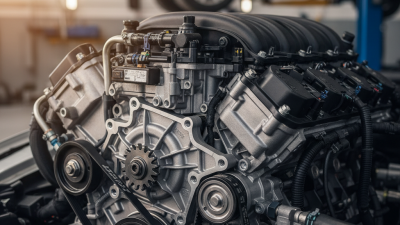
So, picking the right Motor Oil Pump isn't just about matching it to an engine model. That pump is what keeps oil flowing, keeps pressure steady, and protects the moving parts. Choose poorly, and you can end up with noisy bearings, pressure that won't hold, or parts wearing out sooner than they should. Honestly, the right call starts with how the engine is actually being used in real conditions.
Dr. Richard S. Grahn, a lubrication systems engineer, has a pretty handy rule of thumb: “Choose a pump for the engine’s real oil needs, not for looks or price.” That’s the kind of thing you pick up from actual workshop experience. A small pump might fit just fine, but it can still fail on a cold start or during long stretches of high-speed driving. And a high-volume pump? It can just add extra drag when the engine doesn’t really need all that extra flow.
Take a good look at the pressure needs, oil viscosity, pump capacity, how it's driven, and the relief-valve setup. And don't just trust the advertised pressure rating—check the manufacturer's actual flow data too. When you inspect the housing, keep an eye out for cracks, gear wear, scoring, or sloppy machining. Honestly, the little stuff matters. A clean pickup screen and the right clearance can affect performance more than you'd think.
This guide walks you through comparing standard, high-volume, and variable-displacement oil pump designs. We also look at passenger cars, performance engines, commercial equipment, and rebuilt setups. Now, some of the advice might seem pretty obvious. But honestly? It doesn't always hold true for every engine. So before you decide, lean on real measurements, service history, and a pro's inspection. At the end of the day, a Motor Oil Pump is a working component - not just some replacement number in a catalog.
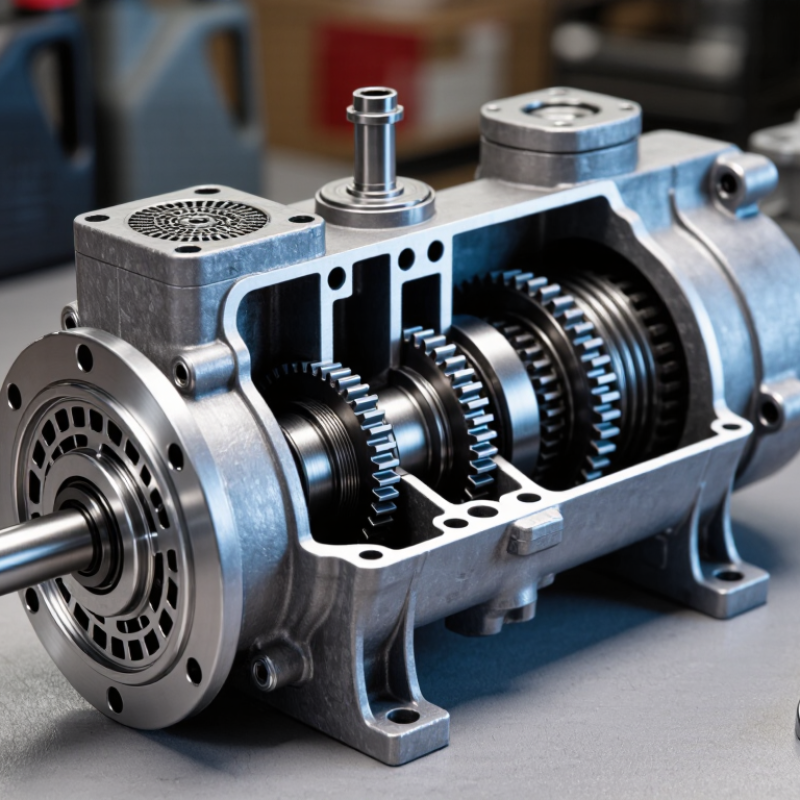
Choosing a Motor Oil Pump starts with the engine’s OEM oil-flow and pressure requirements. Do not size the pump from horsepower alone. The service manual should show minimum hot-idle pressure, rated-speed pressure, and required flow in litres per minute. These values protect bearings, cam surfaces, and turbocharger passages under real operating conditions.
Use the correct viscosity reference. SAE J300 defines engine-oil viscosity grades, while SAE technical guidance links viscosity, temperature, and pumpability. The U.S. Department of Energy’s Transportation Energy Data Book identifies engine friction as a major source of vehicle energy loss. That makes oil delivery important, but excessive pressure can waste power and increase heat. A suitable Pump Motormust meet flow demand without constantly forcing the relief valve open. Check cold-start conditions too. Oil can move slowly at low temperatures.
Tips: Record OEM pressure at idle and maximum speed. Then compare those figures with the pump curve, not only the catalogue peak. Confirm inlet diameter, relief-valve setting, filtration resistance, and oil temperature. For example, a pump delivering 25 L/min at 4 bar may fail if the engine requires 30 L/min at operating temperature. I have seen specifications judged only at room temperature. That is a weakness. Recheck them at 100°C, and question any missing test condition. Use calibrated gauges and repeat the measurement. Small errors matter.
Choosing the right Motor Oil Pump starts with the oil’s viscosity, not the pump’s advertised flow rate. SAE J300 grades describe how oil behaves during cold cranking and at high temperature. In 5W-30, “5W” indicates winter performance, while “30” reflects viscosity near normal engine operating temperature.
Cold starts matter. A thick oil can slow pump rotation and increase electrical or mechanical load. A suitable low-temperature grade helps oil reach bearings faster during a frosty morning.
However, selecting an extremely thin oil may reduce pressure when the engine is hot, especially with worn bearings or larger internal clearances. The engine’s service specification should guide the acceptable SAE grade.
Operating temperature also changes the decision. Engines working under heavy loads, long climbs, or high ambient heat may keep oil near 100°C or higher. The second SAE number then becomes important. A 10W-40 oil generally resists thinning more than a 10W-30 oil at operating temperature, but it may demand more pumping effort when cold.
A practical inspection includes measuring hot idle pressure, checking oil temperature, and reviewing the pump’s relief-valve setting. Do not judge pump health from pressure alone. Excessive pressure can indicate restricted passages or an unsuitable oil. I have seen cold-start noise blamed on a weak pump when the real issue was oil that was too thick. Measure, do not guess. SAE J300 provides the viscosity framework, but clearances, temperature, pump design, and engine condition must be considered together.
Choosing a Motor Oil Pump starts with the duty cycle, not the catalog photograph. The U.S. Department of Energy’s Motor Systems Market Assessment reports that motor-driven systems consume about 68% of U.S. manufacturing electricity. That figure is not oil-pump-specific, but it explains why small efficiency losses deserve attention. Check hot-idle pressure, cold-start viscosity, speed range, and installation space. A pressure gauge helps.
Gear Pumps are simple, durable, and tolerant of contaminated oil. They suit steady-flow requirements and usually offer predictable service costs. However, fixed displacement can create excess flow at high engine speed. That increases bypass losses and heat. Gerotor pumps use inner and outer rotors, giving compact packaging and low pulsation. They often fit applications where quiet operation matters. Still, tight clearances demand clean oil and accurate machining. That detail is easy to underestimate.
Variable-displacement pumps adjust output as demand changes. They can reduce parasitic load during cruising or low-demand operation. The IEA’s Energy Efficiency 2024 analysis places motor systems near 53% of global electricity use, reinforcing efficient control’s importance. For a Hydraulic Pump Motor installation, confirm control response, relief-valve behavior, and failure-safe operation. I would not choose the most adjustable design automatically. Extra controls add calibration points and possible faults. Compare pressure stability, oil temperature, and power draw on the actual engine. A bench result can mislead.
| Selection Dimension | Gear Pump | Gerotor Pump | Variable-Displacement Pump |
|---|---|---|---|
| Basic Operating Principle | Uses two meshing gears to trap oil and carry it from the inlet to the outlet. | Uses an inner rotor and an outer rotor with one additional tooth or lobe difference to transport oil through expanding and contracting cavities. | Changes pumping displacement, commonly through a movable element or adjustable pumping geometry, to match engine oil-flow demand. |
| Construction Complexity | Low to moderate | Moderate | High |
| Flow Characteristics | Provides a steady positive-displacement flow that is closely related to pump speed and displacement. | Provides smooth positive-displacement flow with compact internal packaging. | Provides adjustable flow, allowing output to be reduced when the engine needs less lubrication and increased when demand rises. |
| Pressure Capability | Suitable for many engine lubrication systems when correctly sized and protected by a pressure-relief system. | Suitable for many passenger-vehicle and light-duty engine lubrication systems when correctly designed and sized. | Suitable for systems requiring controlled oil pressure and flow across changing engine speeds, loads, and temperatures. |
| Efficiency at High Engine Speed | Can experience increased churning, leakage, and drive power demand as speed rises. | Often offers efficient packaging and smooth operation, but high-speed losses still depend on clearances, oil viscosity, and design. | Generally strongest potential for reducing unnecessary pumping losses because displacement can be matched to demand. |
| Low-Temperature Performance | Positive-displacement operation can deliver flow during cold starts, but thick oil increases drive torque and relief-flow losses. | Can perform well during cold starts when clearances and inlet geometry are designed for the selected oil viscosity. | Requires careful calibration and control so that cold oil does not cause excessive pressure, torque demand, or control instability. |
| Pressure Regulation | Usually relies on a pressure-relief valve to limit maximum system pressure. | Usually relies on a pressure-relief valve; regulation behavior depends on pump geometry and system design. | Can regulate pressure by changing displacement, often supplemented by a relief or safety valve. |
| Control Requirements | Minimal | Minimal | Requires mechanical, hydraulic, electronic, or electro-hydraulic control, depending on the design. |
| Packaging | Can be robust, but the housing may be wider or longer depending on gear size and required displacement. | Compact and well suited to integration into engine front covers, crankcases, or other confined spaces. | Packaging is more demanding because the pump must accommodate adjustment hardware, actuators, or control passages. |
| Noise and Pulsation | May produce gear-meshing noise and flow pulsation; results depend on tooth profile, speed, clearances, and housing design. | Typically provides smooth flow with low pulsation, although rotor profile and manufacturing accuracy influence noise. | Noise and pulsation vary widely with the internal mechanism and control strategy; calibration can affect operating behavior. |
| Contamination Tolerance | Requires clean oil and suitable filtration because particles can damage gears, surfaces, or pressure-control components. | Requires clean oil because small rotor clearances can be affected by abrasive particles or varnish. | Requires clean oil and reliable filtration because contamination can affect both pumping surfaces and displacement-control components. |
| Maintenance Considerations | Generally straightforward to inspect for gear wear, housing scoring, shaft wear, and excessive clearance. | Inspection focuses on rotor wear, housing condition, end clearance, and correct alignment. | Inspection includes the pumping elements plus the adjustment mechanism, actuator, control valve, sensors, and calibration. |
| Typical Application Fit | Cost-sensitive, rugged, and relatively simple engine lubrication systems where fixed flow is acceptable. | Compact engines and applications where smooth operation, efficient packaging, and moderate complexity are priorities. | Modern engines with variable lubrication demands, fuel-economy targets, thermal-management requirements, or active oil-pressure control. |
| Main Advantages | Simple design, durable construction, predictable displacement, and comparatively easy servicing. | Compact size, smooth delivery, good packaging flexibility, and efficient use of available space. | Reduced excess flow at some operating conditions, improved ability to match oil delivery to demand, and potential reduction in parasitic losses. |
| Main Limitations | Fixed displacement can pump more oil than necessary at some speeds, increasing bypass flow and drive losses. | Performance is sensitive to rotor clearances, manufacturing accuracy, oil viscosity, and contamination. | Higher cost, greater design complexity, more demanding controls, and increased sensitivity to calibration and system integration. |
| Best Choice When | Reliability, simplicity, fixed-flow operation, and ease of service are more important than actively minimizing pumping losses. | Space is limited and a compact, smooth-running positive-displacement pump is required. | Oil demand changes significantly with engine speed and load, and the system is designed to manage variable displacement safely. |
| Key Sizing Inputs | Required oil flow, operating speed range, oil viscosity, pressure target, relief-valve setting, drive torque, and allowable leakage. | Required oil flow, rotor dimensions, operating speed range, oil viscosity, clearances, pressure target, and inlet restrictions. | Required minimum and maximum displacement, control response, pressure target, operating speed range, oil viscosity, actuator capacity, and fail-safe behavior. |
Selection should be based on the complete lubrication system rather than pump type alone. Confirm required flow and pressure at cold-start and fully warmed operating conditions, while also checking inlet restriction, filtration, relief-valve behavior, drive torque, leakage, and compatibility with the specified engine oil.
Choosing the right motor oil pump starts with matching displacement to the engine’s real oil-flow demand. The basic relationship is Q = D × N, where Q is theoretical flow, D is displacement per revolution, and N is pump speed in revolutions per minute. Units matter. If an engine needs 18 liters per minute at 1,800 rpm, convert 18 liters to 18,000 cubic centimeters. The calculation becomes 18,000 ÷ 1,800, giving 10 cc per revolution.
Actual pumps rarely deliver their theoretical output. Internal clearances, oil temperature, viscosity, and pressure reduce flow through volumetric losses. If measured efficiency is 85 percent, divide the required displacement by 0.85. In this example, 10 ÷ 0.85 equals about 11.8 cc per revolution. That figure provides a more realistic starting point, not an automatic final choice. A cold, thick oil may demand more drive torque, while hot oil can increase internal leakage.
Confirm the pump shaft speed rather than assuming it matches engine rpm. Gear drives, chains, and belt systems can change the ratio. A pressure gauge and flow test at operating temperature provide stronger evidence than catalog estimates. I have seen clean calculations fail when the pump speed was taken from crankshaft rpm instead of the actual drive shaft. That assumption matters. Also check relief-valve settings, pickup restrictions, and sump level before increasing displacement. More flow is not always better; excessive flow can raise power demand and expose weak passages or seals. Measure twice. Then compare the result with the engine builder’s pressure and lubrication requirements.
Size pump displacement using the flow requirement, operating speed, and the formula Q = D × N. The chart shows the theoretical displacement required to deliver common oil-flow targets at different pump speeds.
Formula: Displacement (cm³/rev) = Flow (L/min) × 1000 ÷ Speed (RPM). These values are theoretical and should be increased as needed to compensate for volumetric losses, oil temperature, pressure, and system efficiency.
Choosing a Pump Oil system starts with the relief valve, not the catalog price. OEM pressure specifications define the safe operating window for lubrication. SAE J300 classifies engine-oil viscosity by temperature, while ASTM D445 measures viscosity at 40°C and 100°C. These figures matter because thick cold oil can raise pressure sharply before the engine warms.
Verify the relief-valve setting with a calibrated mechanical gauge. Test pressure during cold start, hot idle, and the specified operating speed. Record oil temperature beside every reading. A valve opening at 7 bar may be correct for one engine and harmful for another. Excess pressure can increase seal loading, filter stress, and parasitic losses. Too little pressure can leave camshaft bearings visibly dry. Small details matter.
Use the exact OEM pressure range, including its tolerance, rather than relying on a generic pump setting. ISO/IEC 17025 calibration guidance supports using traceable measurement equipment for dependable results. The U.S. Department of Energy’s Vehicle Technologies Office also identifies lubrication and pumping losses as important efficiency factors, particularly during cold operation. In practice, I would recheck the valve after installation, because a clean bench test does not reproduce every engine condition. That assumption can be wrong. Temperature, oil aeration, and clearance changes deserve attention.
API SP and ILSAC GF-6 compatibility matter when selecting a pump for modern engines. These standards address oil performance, wear protection, deposits, and timing-chain durability. A suitable pump must deliver steady flow with the specified oil viscosity. Check the vehicle manual before comparing pump designs.
Inspect the original pump’s mounting points, gear profile, pickup location, and pressure-relief system. A small mismatch can cause poor priming or unstable pressure. API SP and ILSAC GF-6 oil may protect the engine, but the pump still needs correct clearances. During installation, check the pickup screen for sludge and inspect the sealing surface carefully. Tiny leaks can appear after a cold start.
Tips: Match the pump to the engine code, not only the vehicle year. Confirm the recommended viscosity, then verify oil pressure at idle and operating temperature. Use a clean container and avoid mixing unknown fluids. A pressure reading that looks acceptable may still hide restricted flow. Do not assume a newer pump is automatically better. This is where judgment matters. I would recheck the manual, because catalog details can be incomplete. A quiet startup is useful evidence, but it is not proof of perfect lubrication.
Choosing the right Oil Pump requires more than matching engine displacement. Compare efficiency at idle, cruising speed, and cold start. U.S. Department of Energy technical assessments place engine friction losses near 15% of fuel energy, so pump drive power deserves attention. Published SAE test programs also report that variable-displacement pumps can cut pump-related power demand by roughly 30–50% under light-load conditions. Actual results depend on calibration, oil viscosity, and temperature.
Cavitation resistance is equally important. Watch inlet pressure, pickup diameter, filter restriction, and oil aeration. A pump may look efficient on a warm test bench, then rattle during a freezing morning start. That detail matters. Use pressure-flow curves across the full speed range, not only the maximum rating. The American Petroleum Institute’s lubricant guidance supports using the specified viscosity grade, because thicker oil increases drag and can delay filling.
Material selection affects service life. Sintered steel gears tolerate repeated loading, while aluminum housings reduce weight but may wear faster with contaminated oil. ISO 4406 cleanliness codes provide a practical way to discuss particle contamination, although they do not predict every failure. I would not trust a claimed service life without test hours, oil temperature, pressure cycles, and failure criteria. In real workshops, neglected oil changes often defeat an excellent design. Keep that uncomfortable fact in view.
Start with the engine manufacturer’s service data. Check required flow, hot-idle pressure, and rated-speed pressure. Do not size from horsepower alone. A pump delivering 25 L/min may fail when the engine needs 30 L/min.
Oil moves differently when cold and hot. Cold oil can delay pump filling and increase drag. Recheck performance near 100°C, not only at room temperature. Cold starts matter.
Compare the complete pressure-flow curve across the working speed range. A catalogue peak can hide weak performance at idle. Confirm that normal operation does not constantly open the relief valve.
Use the viscosity grade specified for the engine. Thicker oil increases resistance and may slow cold filling. Incorrect viscosity can raise heat and reduce delivery. The details are easy to underestimate.
It can reduce pump-related power demand during light-load operation. Published testing has reported reductions of roughly 30–50%. Actual savings depend on calibration, temperature, and oil viscosity. Results will vary.
Restricted filters, narrow pickup tubes, low inlet pressure, and aerated oil can cause cavitation. Listen for rattling during a cold start. Check the inlet path carefully. Rattling is a warning.
Sintered steel gears handle repeated loading well. Aluminum housings reduce weight but may wear faster with contaminated oil. Material choice cannot replace clean oil and suitable filtration.
Request test hours, oil temperature, pressure cycles, and failure criteria. Ask how contamination was controlled. A claimed lifespan without conditions is incomplete. I would remain skeptical.
Use calibrated pressure gauges and repeat the measurements. Record inlet diameter, filter resistance, relief-valve setting, oil temperature, and engine speed. Small errors matter. Room-temperature testing alone is weak.
Choosing the right Motor Oil Pump starts with understanding the engine’s oil-flow and pressure requirements, using reliable OEM data as the primary reference. Oil viscosity should match the correct SAE J300 grade and the engine’s operating temperature range. Next, select a suitable pump design, such as a gear, gerotor, or variable-displacement pump, based on the engine’s lubrication demands, efficiency goals, and available space. Pump displacement can be estimated from required flow, operating speed, and the Q = D × N relationship, while the relief-valve setting must be checked against the specified pressure range.
For modern engines, confirm compatibility with current API SP and ILSAC GF-6 performance requirements. A complete evaluation should also compare volumetric and mechanical efficiency, cavitation resistance, construction materials, durability, noise, and expected service life. The best choice is not simply the pump with the highest output, but the one that delivers stable pressure, adequate lubrication, and reliable performance across all operating conditions.