 +8613126993997
Leave Your Message
- Contact WhatsApp
-
 Contact Phone
-
 Contact Email
Buying a Hydraulic Hammer isn't just about comparing prices. If you're a global buyer, you've got to line up impact energy, carrier weight, operating pressure, and local service support. Get one of those wrong, and you'll see weak production, too much vibration, and bushings wearing out way too soon. Little mistakes? They get expensive fast.
There's solid industry data behind taking your time here. Grand View Research's Construction Equipment market analysis points to infrastructure development and replacement demand as big growth drivers. And hydraulic breaker studies from Research and Markets show rising demand across construction, mining, demolition, and quarrying. So yeah, it's a broad market—but that doesn't mean regional differences disappear. A contractor in Canada might need cold-weather seals. A buyer in Southeast Asia might care more about corrosion protection and fast parts delivery. Where the machine works really does matter.
Don't just trust the brochure.
Professional buyers should dig into technical drawings, duty-cycle guidance, warranty exclusions, noise limits, and service records. The Association of Equipment Manufacturers keeps stressing productivity, safety, and lifecycle support in equipment purchasing decisions—and those same principles apply to hydraulic attachments. A reliable supplier should be able to talk through back-head pressure, tool diameter, nitrogen charging, and recommended carrier flow without hiding behind vague claims.
The cheapest quote can end up costing you the most. But a high price tag alone doesn't prove anything either. Ask for test videos, reference customers, spare-parts lead times, and a written compatibility statement. Sometimes checking two hoses, one mounting bracket, and the tool retainer is what prevents a major failure. No checklist can remove every risk. Even experienced teams sometimes miss local technician availability or transport delays. These ten buying tips are meant to give you a practical framework—better questions, stronger evidence, and a Hydraulic Hammer that keeps performing long after the sales pitch is over.
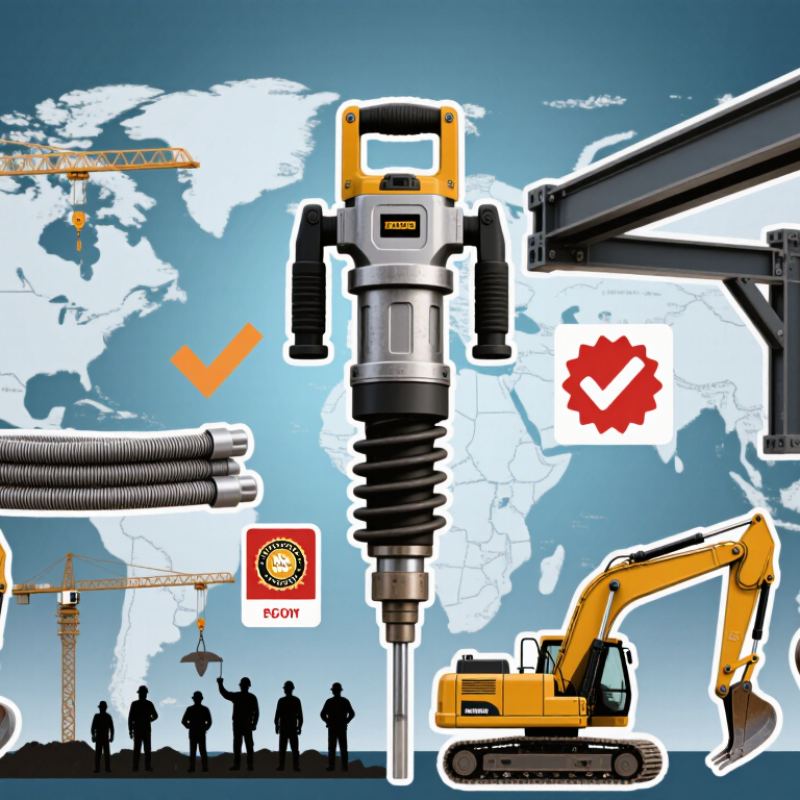
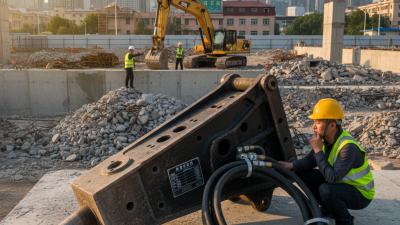
Before comparing prices, define what the Hydraulic Breaker Hammer must accomplish. Concrete demolition, trenching, quarry scaling, and primary rock breaking require different impact classes. A compact breaker may work efficiently on sidewalk slabs but stall against reinforced foundations or dense basalt.
Carrier compatibility matters as much as impact energy. Check the excavator’s operating weight, hydraulic flow, pressure, mounting dimensions, and relief-valve setting. A breaker receiving insufficient flow will feel weak. Excess pressure can accelerate seal and piston wear. The 2024 USGS Mineral Commodity Summaries reported approximately 1.5 billion metric tons of crushed stone production in the United States during 2023. That scale shows why quarry buyers should prioritize sustained energy, cycle stability, and service access, not only nominal blow force.
Material hardness and thickness should determine the required class. Ask for field-tested performance data, including blows per minute, recommended tool diameter, and hydraulic consumption. The 2024 Global Construction Perspectives report forecasts average global construction output growth of about 2.4% annually through 2029, increasing pressure on equipment productivity. Still, bigger is not always better. Oversizing may damage the carrier, waste fuel, and reduce control in urban work. A perfect match is rare. Recheck the selection against actual rock conditions, because initial assumptions are often too optimistic.
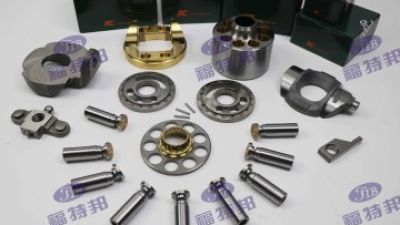
The HPV95 Hydraulic Pump Rotary Group is designed for excavator hydraulic systems that require stable power transmission, accurate flow control, and dependable service life. Industry demand continues to grow as construction and mining fleets prioritize component efficiency and repairability. A 2024 global Hydraulic Equipment market report estimates that the sector will maintain a mid-single-digit annual growth rate through 2030, while field-service studies consistently identify contamination control, dimensional accuracy, and timely parts availability as major factors affecting pump performance.
Factory-direct sourcing from established Chinese suppliers provides practical advantages for distributors and repair workshops. This rotary group is manufactured in China, with complete model availability, a monthly supply capacity of up to 10,000 units, and flexible delivery scheduling. Buyers can also access one-stop purchasing for Excavator Parts, helping reduce procurement time and improve compatibility across different machine models. Quality control is supported by competitive pricing, responsive after-sales service, and a six-month warranty. For businesses seeking a reliable replacement solution, the HPV95 rotary group offers a cost-effective balance of production capacity, component consistency, and supplier support.
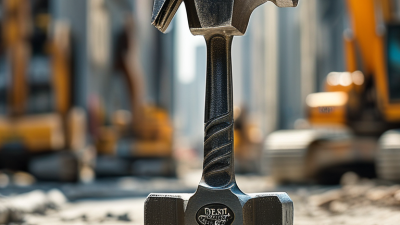
Inspect housing thickness, weld quality, tool retention, and hydraulic connection protection. Paint alone proves little. Request test records, service intervals, and operating limits for your excavator.
Easy access reduces inspection time and unexpected downtime. Check grease points, charging valves, bushings, and the lower tool area. A narrow opening can turn a ten-minute check into an afternoon repair.
Request service diagrams, torque specifications, lubrication instructions, and replacement procedures. Confirm that major valves can be inspected without removing most of the assembly. Clear instructions matter more than impressive sales language.
Consider seals, diaphragms, tie rods, bushings, tool bits, and valve components. Choose quantities based on real wear patterns. Keep a small kit at remote sites. Maybe my suggested stock is still too generous.
Check part numbers, dimensions, diagrams, and identification labels before ordering. Unclear markings often cause costly delays. A photograph beside a ruler can prevent mistakes.
Ask about response times, technician coverage, spare-parts locations, and operator training. Remote projects may need critical seals within 48 hours. Vague promises are not support.
Request conformity documents, safety instructions, technical references, and serial-number traceability. Confirm that every document matches the exact model. Paperwork helps, but field evidence still matters.
Check coverage for the piston, accumulator, tool, hoses, and mounting bracket. Review exclusions, maintenance records, transport costs, and repair conditions. A long warranty period alone proves very little.
Include purchase price, installation, tools, lubrication, scheduled service, downtime, and resale value. Test the hammer on representative rock or concrete when possible. Record vibration, oil temperature, cycle consistency, and noise. My checklist may overvalue documents and undervalue field judgment.
Choosing the right Hydraulic Hammer requires more than comparing purchase prices. Global buyers should first define the intended purpose, material conditions, and required impact class, then confirm that the hammer’s weight and energy are suitable for the carrier’s size and lifting capacity. Hydraulic compatibility is equally important, so working pressure, flow rate, hose connections, and control requirements must match the excavator or other carrier. Buyers should also select suitable chisel types and materials according to the application, whether it involves concrete, rock, asphalt, or general demolition work.
Long-term performance depends on construction quality, wear resistance, easy maintenance access, and the availability of replacement parts. Before making a decision, evaluate the supplier’s technical support, product documentation, certifications, warranty terms, and response capability. A complete total-cost assessment should include installation, transportation, routine servicing, consumables, and potential downtime. By reviewing these factors systematically, buyers can reduce compatibility risks, improve operating efficiency, and select a reliable Hydraulic Hammer that delivers consistent value across different working environments.