Picking out a Rotary Valve in 2026 isn’t just about going with the latest trend or what's popular. It really starts with understanding the material you're working with, the process involved, and the operating conditions — not just a popularity contest. For example, a valve that's perfect for handling fine flour has totally different requirements than one that moves gritty, abrasive granules or damp, flaky materials. In this guide, we’ll dive into some of the most common designs like rotary airlock valves, rotary feeders, rotary diverters, and rotary plug valves — each with its own specific role. Some help control discharge and keep air leakage down; others are more about delivering a precise amount of material; and some are built to change the direction of the flow. Basically, choosing the right one depends on what exactly you need it to do.
Now, don’t overlook the small details. Things like particle size, bulk density, temperature, pressure, and cleaning needs can really impact how well a valve performs. Sometimes, a valve might seem perfect on paper but then end up bridging, leaking, wearing out too quickly, or being a nightmare to maintain once it’s actually in your setup. That’s why I never just look at basics — I also consider how it’s built, where it’s usually used, its operational limits, and what practical questions you should ask before buying. Also, make sure to check the manufacturer’s data and verify that their capacity claims match your specific material and process conditions. There’s no one-size-fits-all champion here, and product descriptions don’t always make comparisons super clear. Oh, and a quick tip — bigger isn’t always better. Just because a valve is oversized doesn’t automatically mean it’s safer or better. So, use the upcoming sections to compare main types of Rotary Valves, weigh the pros and cons, and put together a shortlist that’s tailored to your particular system and needs.
What Defines a Rotary Valve and Its Main Components
A Rotary Valve controls flow by turning a closure element inside a stationary body. In a ball valve, a bored sphere rotates; in a butterfly valve, a disc turns across the flow path. In powder handling, a rotor with pockets meters material while limiting air movement. The term covers distinct designs, so“Rotary Valve” alone does not specify its duty. Small detail, big difference.
A typical assembly includes a body, rotor or disc, shaft, bearings, seals, and an actuator or hand lever. The body contains pressure and provides the flow passage. The rotating element opens, throttles, or meters flow. Seals reduce leakage, while bearings support smooth shaft rotation. ISO 5211:2017 specifies interfaces for part-turn actuators, helping engineers match actuators to valve mounting points. It does not define every valve’s internal design. Grand View Research’s Industrial Valves Market report estimated the global market at about US$78 billion in 2023, reflecting broad use across process industries. That figure covers many valve types, not Rotary Valves alone. Real selection still depends on media, temperature, pressure, and required shutoff. A seal that works with clean air may wear quickly with abrasive powder.Engineers sometimes overlook this.
How Rotary Valves Control Flow
Rotary Valves control flow by rotating a component between open and restricted positions. In a rotary airlock, a pocketed rotor carries measured amounts of powder or granules from an inlet to an outlet. Its vanes also help limit air leakage between zones. The seal is useful, but rarely perfect.
Different designs manage flow in different ways. A rotary plug valve turns a bored plug to align or block a passage, making it suited to on-off service and some throttling tasks. A butterfly valve uses a rotating disk; changing its angle adjusts the opening for liquid or gas flow. That matters. The valve’s shape, clearances, and seals affect both capacity and leakage.
For bulk materials, rotor speed influences feed rate, but faster is not automatically better. Uneven particles can bridge, wear clearances, or make discharge inconsistent. Small details count. Operators should check material size, moisture, pressure difference, and required flow before selecting a type. Real systems can behave less neatly than diagrams suggest, so measured operating data is worth reviewing. A valve that works smoothly with dry pellets may struggle with damp powder.
Criteria for Comparing Rotary Valve Types in 2026
Comparing Rotary Valve types in 2026 starts with the material, not the catalog label. Note whether the valve handles fine powder, pellets, or irregular flakes. These behave differently at the rotor tips and housing. A fine, dusty product may expose leakage sooner, while large particles can jam clearances. Small details matter.
Compare capacity under the same conditions. Check inlet size, rotor pocket volume, speed, and the pressure difference across the valve. A higher rotation rate may increase throughput, but it can also cause extra wear or product damage. Ask for test data using a material close to yours. When assessing an R60 Rotary Valve, verify its stated duty and operating limits rather than inferring performance from the model name.
Construction and upkeep matter just as much. Review contact materials, seals, bearing placement, and access for inspection. For abrasive solids, ask how clearances are maintained as parts wear. For heat-sensitive materials, check temperature limits and whether friction could affect product quality. Cleaning needs can change the best choice, especially when residue collects in pockets. That trade-off matters.
I would compare valves using a short checklist and the same feed conditions, then confirm results with an application engineer. No scorecard captures every plant’s quirks. Record actual flow, leakage, temperature, and maintenance intervals during a trial; those observations may challenge the initial choice.
Rotary Airlock Valves for Bulk Solids Handling
Rotary airlock valves meter bulk solids while limiting air leakage between process zones. The main types include drop-through, blow-through, and side-entry designs. A drop-through valve suits gravity-fed powders and granules. A blow-through model sends material into a conveying line, while a side-entry arrangement can help with certain feeder layouts. Selection depends on particle size, flow rate, pressure difference, and how abrasive or fragile the material is.
Small gaps matter. Rotor pockets, end clearances, and housing seals affect leakage and wear. For example, coarse granules may tolerate a different rotor profile than a fine, dusty powder. A Yc35 Rotary Valve may appear in a buyer’s search, but the designation alone does not confirm its capacity or suitability. Check the actual drawings, materials, operating pressure, and cleaning requirements. Dust tells a story: buildup near the end plate can signal poor fit or a maintenance issue. One point is easy to overlook: a valve that meters well during a short test may behave differently after hours of operation. Review performance under real feed conditions, and leave room for adjustment.
Rotary Plug and Ball Valves for Process Flow
Rotary plug and ball valves turn a stem through roughly a quarter-turn to open or isolate process flow. Their compact motion suits frequent operation, but the right choice depends on the fluid, pressure, and control duty. Grand View Research’s 2024 Industrial Valves Market report estimated the global market at about US$78 billion in 2023, with expected annual growth near 4.9% through 2030. That scale reflects broad demand, not proof that one valve type fits every line.
Plug valves use a rotating plug with a flow passage. They can be practical for viscous fluids or services carrying suspended solids, especially when the design and lining match the process. Ball valves usually provide tight shutoff and low resistance when fully open. A full-bore model can leave a nearly unobstructed path for liquid flow. Small detail, big effect. Seat materials, solids, and temperature still matter.
For throttling, neither a standard plug nor a standard ball valve should be chosen by habit. A V-port ball or a purpose-designed control plug may offer more predictable adjustment, but sizing needs actual flow and pressure data. The U.S. Department of Energy’s Improving Pumping System Performance guide emphasizes matching pumping equipment to system demand; valve selection is part of that check. A valve that is oversized may spend its life barely open. That is easy to miss. Compare pressure drop, shutoff needs, cycle frequency, and maintenance access before specifying the trim.
Butterfly Valves for Large-Diameter Applications
For large-diameter pipelines, butterfly valves are often selected for their compact bodies and quarter-turn operation. A circular disc rotates inside the flow, taking up less space than many full-bore valve designs. That matters. A lighter assembly can simplify support and installation, especially where overhead clearance is limited.
Sizing still needs care. The disc remains in the flow path when open, creating some pressure loss. On a wide line, even a small loss can affect pumping costs over time. Check the expected flow, operating pressure, fluid properties, and required shutoff performance before choosing a seat or disc material. The actuator matters too: a valve that turns easily at low pressure may need much more torque under operating conditions. Field conditions can surprise you.
For maintenance teams, access to the stem, bearings, and actuator should be planned before the pipework is fixed. A tight installation may make routine inspection awkward. If a specification or search query uses “Ec55 Rotary Valve,” confirm what equipment it refers to rather than assuming it describes a butterfly valve. Terms are not always consistent. A clear datasheet and documented operating limits make comparison more reliable than the name alone.
Top Rotary Valve Types in 2026: Butterfly Valves for Large-Diameter Applications
Indicative nominal diameter ranges (DN) commonly found in industrial designs. Actual ranges vary by pressure class, materials, and manufacturer.
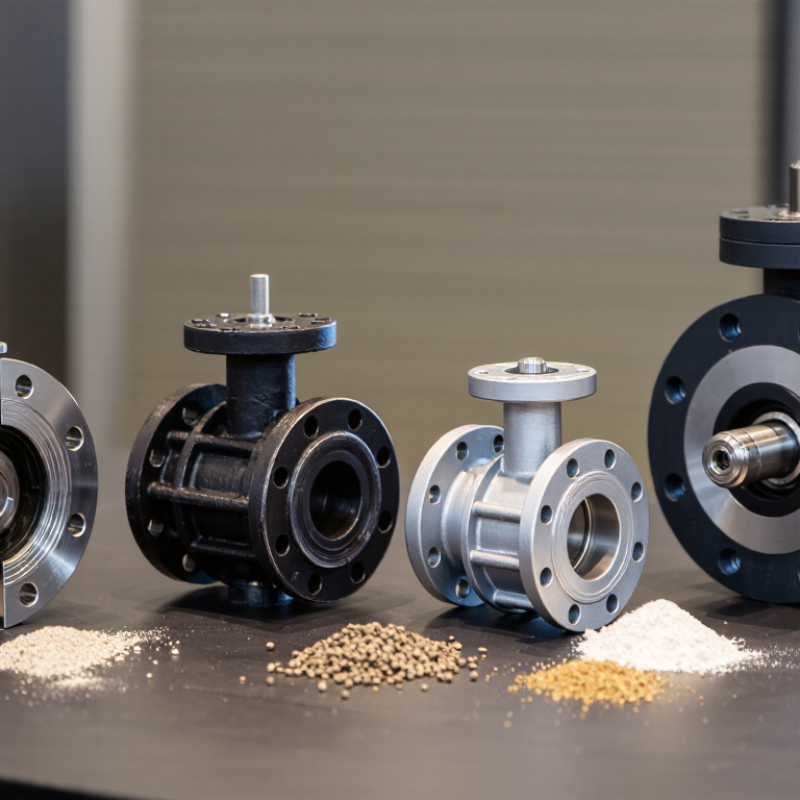
Butterfly valves are often selected for large-diameter service because their compact, lightweight design can simplify installation. Ball and plug valves are also widely used, with size suitability depending on operating conditions and design.
How to Select a Rotary Valve for a Specific System
Selecting a Rotary Valve starts with the material, not the catalogue label. Check particle size, bulk density, moisture, temperature, and whether the product is abrasive or prone to bridging. A dry powder that flows freely may behave very differently after absorbing humidity.
Dust changes everything.
Next, match the valve to the system’s required feed rate and pressure conditions. Compare the expected throughput with the valve’s displacement per revolution and operating speed. Also check the pressure differential, because leakage and wear can increase when operating conditions exceed the design range. A Dx80 Rotary Valve may appear suitable by size alone, but its name does not confirm material compatibility or performance in a specific installation. Ask for operating limits and test data relevant to your actual process.
Consider rotor clearance, housing material, seals, drive controls, and access for cleaning or inspection. If the product can damage surfaces, request wear guidance; if contamination matters, verify how the valve can be cleaned. Leave room for speed adjustment where feed rates vary. A sizing spreadsheet is useful, but it can create false confidence when actual bulk density changes. Test the real material under representative conditions, and review the result with the system’s operating team before final selection.
FTB-Kato HD820-3 Excavator Oil Return Check Valve: Reliable Hydraulic Protection from China Suppliers
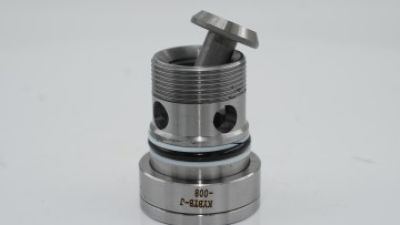
The Oil Return Check Valve, part number KYBTB-J-008, is a new replacement component designed for HD820 and HD820-3 excavators. Installed in the hydraulic return circuit, a Check Valve helps regulate fluid direction and limit unwanted reverse flow, supporting dependable system operation and protecting hydraulic components from avoidable pressure disturbances. Supplied by leading manufacturers in China, this high-quality part is produced under factory manufacturing processes for buyers seeking a practical replacement for equipment maintenance.
Hydraulic reliability also depends on clean fluid and sound maintenance practices. ISO 4406:2021 classifies hydraulic-fluid cleanliness by measuring particle counts at ≥4, ≥6, and ≥14 μm(c), providing technicians with a standardized way to assess contamination that can contribute to wear or valve malfunction. This valve is available in neutral or FTB packaging and can be shipped by sea, air, or express, allowing purchasers to select an option suited to their delivery schedule.
Conclusion
A Rotary Valve controls the movement of liquids, gases, or bulk solids by turning an internal element, such as a plug, ball, disc, or rotor. Its main components typically include a body, a rotating closure or metering element, a shaft, and an actuator or drive. As the element turns, it opens, restricts, redirects, or stops flow. In 2026, comparing valve types means considering the material being handled, operating pressure and temperature, required flow capacity, sealing performance, maintenance needs, and the dimensions of the system.
Different designs suit different tasks. Rotary airlock valves meter bulk solids and help maintain pressure differences between connected equipment. Rotary plug and ball valves provide dependable on-off or flow-control functions in process systems, while butterfly valves offer a compact option for large-diameter pipelines. Selecting the right valve starts with defining the system’s flow requirements and operating conditions, then matching those needs to the valve’s design, materials, and installation constraints.

 +8613126993997
 Contact Phone
 Contact Email