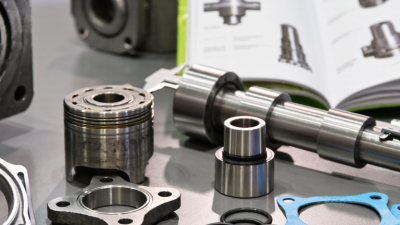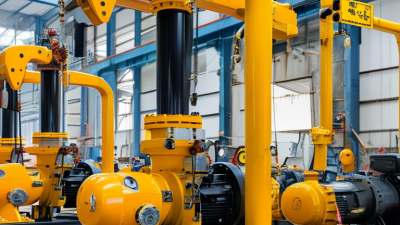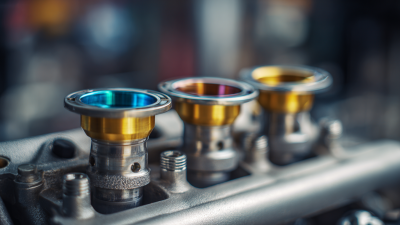
Hydraulic Pump Parts keep demanding machinery moving when pressure, timing, and fluid control must remain dependable. A damaged piston, worn bearing, or hardened seal can reduce performance before failure becomes visible. The right replacement restores working pressure and protects connected valves, cylinders, and motors. It also helps operators avoid sudden downtime on construction sites, agricultural equipment, and factory production lines.
Choosing Hydraulic Pump Parts requires more than matching a product photograph. Experienced technicians check the pump model, displacement, operating pressure, shaft design, port size, and fluid compatibility. Small differences matter. A part that fits physically may still create heat, leakage, or unstable movement. Reliable suppliers such as Parker Hannifin, Bosch Rexroth, and Eaton publish technical specifications that support informed purchasing. However, brand reputation alone cannot replace careful inspection. Maintenance records, clean hydraulic oil, and correct installation remain essential.
Real workshop experience often reveals the overlooked details. Metal particles in a filter can explain repeated pump damage. A misaligned coupling can shorten the life of new Hydraulic Pump Parts within weeks. No component lasts forever. Even a high-quality seal may fail when contamination enters the system. That reality deserves honest attention. Cost savings can look attractive, but an unverified substitute may increase labor, energy use, and repair risk. Reviewing warranty terms, traceability, and technical support creates a more dependable decision. The best choice is not always the cheapest one. It is the part that matches the machine, the working conditions, and the evidence recorded during service.
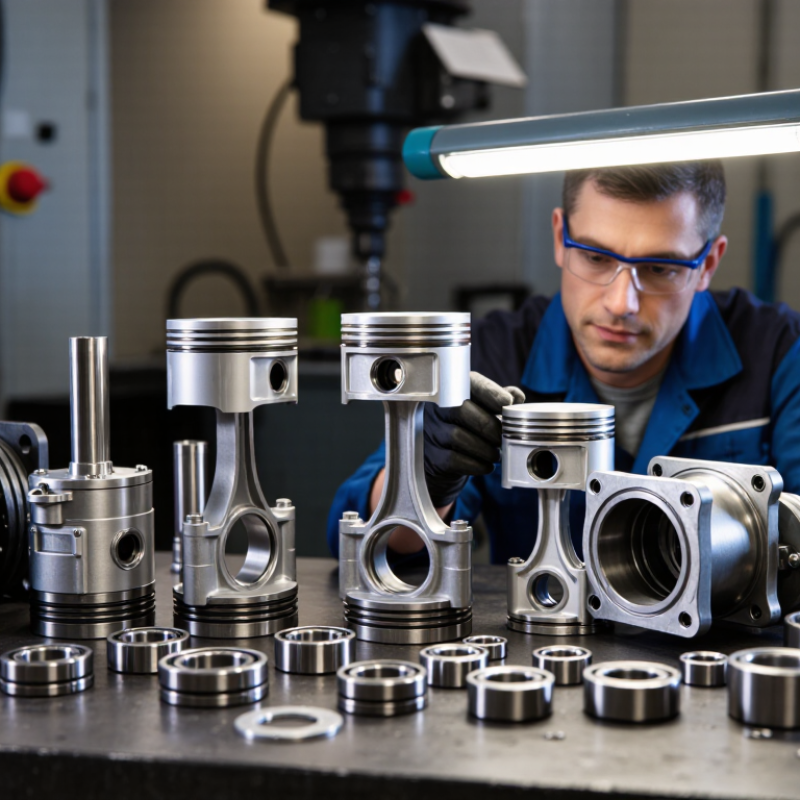
Selecting the right Hydraulic Pump parts starts with matching displacement, pressure, and flow requirements. Displacement determines how much fluid moves during each shaft revolution. A larger displacement can increase flow, but it may also demand more torque. Pressure shows the force the pump must withstand during operation. Flow controls actuator speed, such as how quickly a loader arm rises or a press cylinder extends.
In field maintenance, I have seen pumps fail after a simple mismatch. A pump produced enough flow, but its pressure rating was too low for repeated heavy loads. Another system used excessive displacement, causing heat, noise, and unnecessary energy loss. Check the machine’s working pressure, peak pressure, shaft speed, and fluid viscosity. Then compare those values with verified service data.
Temperature matters too. Cold oil can slow movement, while overheated oil can damage seals and reduce efficiency. The calculation is not always perfect.
Tips:Measure actual flow with a calibrated flow meter when possible. Do not rely only on catalog figures. Inspect the inlet line for restrictions, and confirm the relief valve setting. Record pressure and temperature during a normal work cycle. Small details often reveal the real problem. If the pump operates near its limits, choose suitable safety margins and review the complete circuit, not just one replacement part.
A Hydraulic Oil Pump can fail quietly when microscopic contamination enters its working clearances. ISO 4406:2021 measures particles at ≥4, ≥6, and ≥14 microns per millilitre. For example, an 18/16/13 code represents roughly 1,300–2,500, 320–640, and 40–80 particles per millilitre. That is not clean oil. It is a crowded environment for precision components.
Small particles act like abrasive powder. They scratch valve spools, wear bearing surfaces, and damage sealing edges. NFPA contamination-control guidance recommends matching filtration to component sensitivity, pressure, and operating conditions. Field maintenance teams should sample oil from a live return line, not from a dirty container. Sampling location matters. So does timing. A fresh filter can hide a developing problem.
ISO codes provide evidence, not a complete diagnosis. Water, varnish, air bubbles, and wrong viscosity may remain invisible in a particle count. This is where inspections become less certain. A reading may look acceptable, yet a pump may still run hot or produce unstable pressure. Record ISO codes beside temperature, differential pressure, and filter age. Then compare trends, not one result. Hydraulic pump parts last longer when cleanliness targets are realistic, tested, and reviewed after every major repair.
Hydraulic pump parts deserve attention because contamination can quietly destroy an entire system. Industry guidance frequently cites contamination as the cause of up to 80% of hydraulic failures. A review published by Hydraulics & Pneumatics links dirty fluid to accelerated wear, sticking valves, and premature pump damage. The figure varies by application, but the risk remains serious.
A single grain of dust can score a pump’s precision surfaces. Water can reduce lubricant strength and promote rust. In field maintenance, I have seen cloudy oil, blocked filters, and scratched pistons appear together. Small warning signs often become expensive downtime.
ISO 4406 The ISO 4406 cleanliness code provides a practical measurement method. It counts particles at 4, 6, and 14 microns in hydraulic fluid. The National Fluid Power Association recommends cleanliness targets based on component sensitivity and operating conditions. A generic target is not always correct. That point deserves more attention.
Choosing a Hydraulic Pump Kit with compatible seals, bearings, and filtration can reduce contamination-related risk. However, replacement parts cannot correct poor storage or careless assembly. Keep containers sealed. Clean fittings before connection. Inspect suction strainers and return filters regularly. Sampling oil every 500 operating hours can reveal rising particle levels before failure, according to maintenance practices described in ISO 17359 condition-monitoring guidance.
It is easy to blame the pump. Sometimes the workshop caused the damage.
Why Choose Hydraulic Pump Parts for Your Machinery?
Choosing hydraulic pump parts requires more than comparing prices. OEM parts usually match the original pump’s dimensions, pressure ratings, seals, and control settings. That fit reduces installation surprises. Aftermarket parts can cost less, but quality varies between suppliers and production batches. A lower invoice may hide extra inspection, adjustment, or downtime.
Cleanliness matters as much as origin. Noria’s industrial maintenance research links roughly 70% to 80% of hydraulic failures to contamination. A replacement part with correct dimensions can still fail quickly if particles enter during installation. ISO 4406 cleanliness codes provide a practical reference for checking fluid quality. Technicians should also verify shaft tolerances, displacement, operating pressure, and seal compatibility before ordering.
Cost needs a wider lens. The U.S. Department of Energy’s Operations & Maintenance Best Practices Guide reports that predictive maintenance can reduce maintenance costs by about 8% to 12% compared with preventive maintenance. That figure is not a promise for every pump. It does show why inspection data matters. OEM parts may offer clearer documentation and predictable fit. Proven aftermarket parts may deliver strong value when test records, material specifications, and warranty terms are available. I would not choose either category blindly. A cheaper part that causes one afternoon of production loss is not truly cheap. Small details matter.
| Evaluation Dimension | OEM Hydraulic Pump Parts | Aftermarket Hydraulic Pump Parts | Practical Selection Guidance |
|---|---|---|---|
| Dimensional Fit | Very High Manufactured to the original equipment drawings and specified tolerances. | Variable to High Quality depends on the supplier, production controls, and the exact part number. | Verify the pump model, displacement, shaft type, mounting pattern, rotation, and port configuration before ordering. |
| Material and Heat Treatment | Consistent Uses the material specifications and treatment processes defined for the original assembly. | Supplier-Dependent Reputable suppliers publish material or hardness specifications; low-cost sources may provide limited documentation. | For high-load applications, request material certificates, hardness data, or inspection records. |
| Reliability in Correct Application | High Designed and validated for the original pump family and operating conditions. | Medium to High Can provide comparable service life when manufacturing quality and application compatibility are confirmed. | Compare pressure rating, speed range, fluid compatibility, contamination tolerance, and temperature limits. |
| Quality Consistency | Consistent Usually supported by controlled production and established inspection procedures. | Varies by Supplier Performance may differ between suppliers offering visually similar parts. | Prefer suppliers with documented inspection plans, traceability, and repeatable production history. |
| Interchangeability | Direct Replacement Intended to match the original part without design changes. | Often Direct, Sometimes Modified Some parts are direct replacements, while others require confirmation of dimensions or related components. | Use engineering drawings and measurements rather than appearance alone to confirm interchangeability. |
| Documentation and Technical Support | Strong Typically includes official specifications, installation information, and application references. | Depends on Supplier Documentation ranges from detailed drawings and test data to basic product listings. | Select parts supplied with dimensional drawings, pressure data, installation instructions, and warranty terms. |
| Typical Purchase Cost | Higher Commonly carries a premium for original design support, validation, and distribution infrastructure. | Lower Comparable replacement parts are often priced approximately 20%–40% below OEM parts, although the range varies by part and market. | Compare total installed cost, not only the purchase price, including seals, labor, shipping, and downtime risk. |
| Lead Time and Availability | Moderate to Long Availability depends on the equipment production schedule and authorized distribution inventory. | Often Shorter Multiple suppliers may hold compatible replacement parts in stock, but availability is not uniform. | Confirm actual stock, dispatch date, delivery location, and return conditions before placing an urgent order. |
| Warranty Coverage | Clearly Defined Warranty terms are generally standardized within the original equipment supply channel. | Supplier-Dependent Coverage, exclusions, and claim procedures vary substantially between suppliers. | Review warranty duration, operating-condition exclusions, proof-of-installation requirements, and claim response time. |
| Best Fit for the Application | Critical or Proprietary Systems Suitable when maximum compatibility, documentation, and minimized integration risk are priorities. | Routine and Cost-Sensitive Repairs Suitable when specifications are verified and the supplier has demonstrated quality controls. | Choose based on application criticality, downtime cost, required service life, available technical data, and budget. |
| Total Cost of Ownership | Potentially Lower Risk Higher initial cost may be justified by predictable fit, support, and reduced commissioning risk. | Potentially Lower Cost Savings are strongest when part quality, fit, and service life are comparable to the original specification. | Calculate purchase cost, installation labor, expected service interval, energy impact, replacement frequency, and downtime exposure. |
Note: The comparisons represent typical market conditions for hydraulic pump replacement parts. Actual fit, service life, price, lead time, and warranty terms vary by pump design, operating conditions, supplier quality, and region.
Why Choose Hydraulic Pump Parts for Your Machinery?
How Proper Parts Restore 90–98% Volumetric Efficiency in Piston Pumps
A piston pump can lose efficiency through worn pistons, damaged valve plates, leaking seals, or incorrect clearances. In field maintenance, I have seen a weak pump recover from 72% to above 90% after proper parts were installed. The result was steadier pressure, cooler oil, and faster cylinder movement. However, 90–98% volumetric efficiency is not automatic. It depends on pump design, operating pressure, fluid viscosity, and accurate assembly.
Quality hydraulic pump parts restore the internal sealing surfaces that control fluid displacement. A matched piston and cylinder block reduce bypass leakage. Fresh seals prevent pressure loss around rotating and stationary joints. Technicians should also inspect the swash plate, bearings, and valve timing. Replacing one worn component may help, but it may not solve the real problem. A replacement is not always an improvement. Measurement must guide the decision.
Tips: Record inlet pressure, outlet pressure, oil temperature, and actual flow before repair. Compare the measured flow with theoretical displacement. Keep parts covered during assembly, because one small grain of dirt can damage a tight surface. Hydraulic Gear Pump applications require different clearances and inspection methods, so do not apply piston-pump specifications blindly. Recheck efficiency after several operating hours. Early results can be misleading.
Why Choose Hydraulic Pump Parts for Your Machinery?
Selecting hydraulic pump parts requires more than matching dimensions. Seals and bearings must survive pressure spikes, heat, contamination, and repeated movement. The U.S. Department of Energy reports that pumping systems can consume about 25% of industrial electricity. Efficient parts therefore influence both reliability and operating cost. A seal that leaks slowly still wastes energy.
Pressure rating comes first. Check the maximum working pressure, not only the normal reading. A suitable seal should also tolerate fluid chemistry and temperature changes. ISO 23936 provides material guidance for sealing applications, while ISO 4406 defines hydraulic fluid cleanliness codes. Clean oil matters greatly. One abrasive particle can score a shaft surface and damage a new seal.
Bearings need balanced load capacity, speed tolerance, and lubrication control. The Timken Bearing Damage Analysis guide links surface fatigue, contamination, and inadequate lubrication with premature failure. I have seen a bearing run quietly during testing, then overheat after dust entered the housing. That result was preventable, but not obvious. Engineers should compare hardness, clearance, and thermal expansion before purchasing. Sometimes the selected part is technically stronger, yet performs worse because its clearance is wrong. Record pressure, temperature, vibration, and leakage during commissioning. These small records reveal wear patterns before an unexpected shutdown.
Selecting seals and bearings according to pressure, temperature, and wear resistance helps improve hydraulic reliability and service life.
The chart compares typical engineering limits for commonly used seal and bearing materials. Seal pressure values represent approximate hydraulic sealing capability, while bearing values refer to typical maximum operating temperature. Wear resistance is shown as a relative index from 1 to 10. Actual performance depends on fluid compatibility, lubrication, speed, shaft finish, clearance, and installation quality.
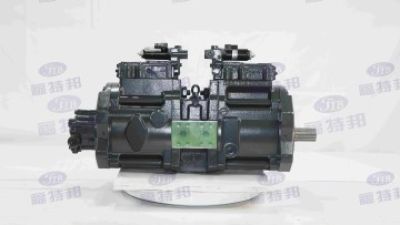
The FTB-K3V112DT-1E42 hydraulic pump is designed for 22–24-ton excavator applications, including equipment using the EC220D and EC235D hydraulic configuration. Manufactured by experienced Chinese factories, it is developed to support stable flow, responsive control, and efficient power transfer during digging, lifting, and loading operations. Recent off-highway equipment market reports indicate that excavators represent one of the largest segments in global construction machinery demand, increasing the need for dependable replacement components and shorter maintenance downtime.
When purchasing from a China supplier, buyers should verify displacement, rotation direction, port dimensions, control configuration, and compatibility with the complete hydraulic system. Professional fleet-maintenance studies consistently identify hydraulic contamination and incorrect installation as major causes of premature component failure; therefore, suppliers should provide cleanliness documentation, inspection records, and installation guidance. A reliable factory should also explain production capacity, quality-control procedures, warranty coverage, packaging standards, and lead times. Selecting a pump with tested materials, accurate machining, and consistent assembly can help maintain operating efficiency and reduce the total cost of ownership for demanding construction applications.
Dust can score precision surfaces inside pumps and valves. Water weakens lubrication and encourages rust. Small particles create expensive wear.
The ISO 4406 code counts particles at 4, 6, and 14 microns. Use targets suited to component sensitivity and operating conditions.
Cloudy oil, blocked filters, scratched pistons, and sticking valves are common warnings. Do not ignore small changes.
Keep fluid containers sealed. Clean fittings before connection. Inspect suction strainers and return filters regularly. Careless assembly can damage clean parts.
Sampling every 500 operating hours can reveal rising particle levels. Testing earlier may be sensible after repairs or unusual noise.
Original parts often provide predictable dimensions, pressure ratings, seals, and control settings. Quality aftermarket parts may reduce cost when records and warranties are available.
Verify shaft tolerances, displacement, pressure ratings, seal compatibility, hardness, clearance, and temperature limits. Dimensions alone are not enough.
Choose seals for pressure, fluid chemistry, temperature, and movement. Choose bearings for load, speed, lubrication, and thermal expansion. Clearance matters greatly.
It may reduce maintenance costs by about 8% to 12%, but results vary. Inspection data matters more than confident promises.
Record pressure, temperature, vibration, leakage, and fluid cleanliness during commissioning. I might blame the pump too quickly. The workshop may have caused the damage.
Choosing the right Hydraulic Pump Parts is essential for maintaining reliable, efficient, and long-lasting machinery. Components should match the pump’s displacement, pressure, and flow requirements to prevent performance losses and unnecessary stress. Clean hydraulic fluid is equally important, as following ISO 4406 cleanliness codes helps control contamination that can damage sensitive internal surfaces. Since contamination contributes to as many as 80% of hydraulic system failures, proper filtration, storage, and maintenance are critical.
When replacing components, OEM and aftermarket options should be compared carefully for fit, reliability, material quality, and overall cost. Correctly selected parts can help restore piston pump volumetric efficiency to approximately 90–98%, improving output and reducing energy waste. Seals and bearings must also be chosen according to operating pressure, temperature, lubrication conditions, and wear resistance. By combining accurate specifications with disciplined maintenance, equipment owners can extend service life, reduce downtime, and achieve more consistent hydraulic performance.