
 +8613126993997



Industry News
0102030405
With Sany’s Flagship Distributor Pulling Out, Troubles Mount for Construction Machinery Dealerships
2026-06-29
Hello everyone, this is FTB Arthur.
A major story has recently shaken the Construction Machinery industry: inNovember 2025, SANY Heavy Machinery officially took over its dealership operations inAnhui and Henan provinces, ending its long-standing partnership with Hefei Xiangyuan.
Hefei Xiangyuan was far from an ordinary dealer. With 30 years of industry experience, it was widely regarded as one of SANY's flagship distributors and played a pivotal role in helping SANY establish its market presence during its early years. Unsurprisingly, the news immediately sparked heated discussions across the industry. Was SANY becoming too aggressive, or were dealers simply no longer able to survive? On the surface, this appears to be the end of a partnership between two companies, but in reality it exposes the deeper structural challenges facing the entire Construction Equipment industry.
01From Industry Benchmark to Exit: The Collective Struggles of Dealers
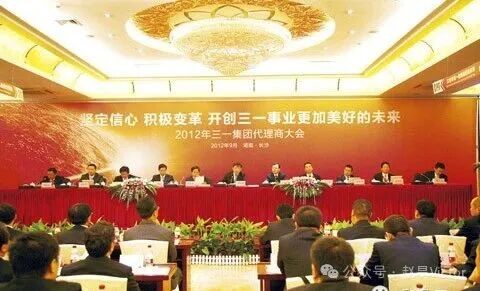
Hefei Xiangyuan's departure is not an isolated incident—it is a reflection of the broader difficulties confronting equipment dealers today.
According to industry data from the first half of 2024, 76.79% of Construction Machinery dealers were operating at a loss, while fewer than one-quarter managed to break even or remain profitable. If even a model dealer like Hefei Xiangyuan struggled, the situation for small and medium-sized dealers is undoubtedly far worse.
Dealers find themselves squeezed from both ends of the supply chain.
Upstream, manufacturers hold most of the bargaining power. In pursuit of higher sales volumes, OEMs often pressure dealers into accepting excess inventory through strict sales targets and mandatory stocking requirements. At the same time, they tightly control pricing policies and service standards, leaving dealers with very limited operational autonomy.
Downstream, customers have become increasingly cautious. As China's real estate market has cooled and returned to more rational levels, demand for excavators has weakened, resulting in oversupply. Large customers increasingly prefer equipment rental over outright purchases, while competition in the mini excavator segment has become so intense that profit margins have virtually disappeared.
Hefei Xiangyuan faced exactly this dilemma. Between January and April 2025, nearly 40% of its orders came through online channels. However, mini excavators generated little or no profit, while prices for medium and large excavators had fallen significantly despite relatively healthy sales volumes.
Even more challenging was the pressure on cash flow.
Construction Machinery is an extremely capital-intensive business. Dealers must finance inventory, provide credit sales, and shoulder after-sales service costs. China's commercial credit system remains imperfect, and the cost of customer default is relatively low. As a result, many dealers have been overwhelmed by bad debts.
Historically, manufacturers and dealers often guaranteed bank loans on behalf of customers, unintentionally weakening end users' legal liability. When loans turned into bad debts, dealers were frequently left to absorb the losses. Even a company as large as Hefei Xiangyuan found it difficult to withstand such financial pressure under today's market conditions.
Another less visible challenge is the inability of many dealers to adapt to the industry's transformation.
In the past, a dealer's primary role was simply to move equipment from the factory to the customer—it was essentially an asset distribution business.
Today, however, customers increasingly expect comprehensive lifecycle support. Yet many dealers remain focused almost exclusively on selling new equipment, with limited investment or expertise in aftermarket services, remanufacturing, and lifecycle management. During a market downturn, this single-source revenue model becomes highly vulnerable.
02Direct Sales or Dealership? It's Not a Simple Either-Or Question
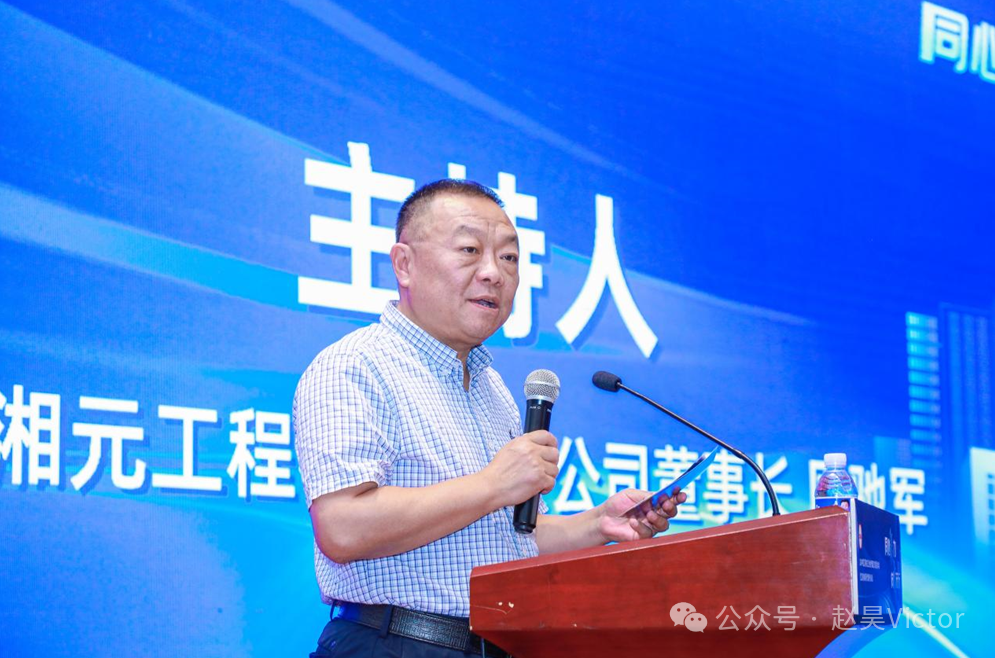
Following SANY's takeover of the Anhui and Henan markets, many observers began asking whether the dealership model was coming to an end and whether manufacturers would eventually shift toward direct sales.
To answer this question fairly, it is important to recognize that the dealership model has been instrumental in the growth of China's Construction Machinery industry.
Since entering the excavator market in 2006, SANY has relied heavily on authorized dealers and still maintains relationships with 16 dealerships today. This demonstrates that in a market characterized by enormous geographic coverage and highly fragmented customers, dealers remain far more effective than direct sales at penetrating local markets.
International markets provide an even stronger example.
Even Caterpillar, the world's largest Construction Equipment manufacturer, continues to rely primarily on an exclusive dealership network across more than 200 countries and territories. Serious conflicts between Caterpillar and its dealers are relatively rare.
That said, the traditional dealership model in China does have significant weaknesses.
Many dealers entered the industry with minimal investment and limited management capability. Their service capacity and risk management were often underdeveloped, leaving them highly vulnerable whenever market conditions deteriorated.
More importantly, manufacturers and dealers have not always shared sufficiently aligned interests. OEMs focus on maximizing sales volume, while dealers prioritize controlling financial risk. Over time, these conflicting objectives naturally create tension.
The termination of the partnership between Hefei Xiangyuan and SANY is essentially the culmination of these long-standing structural conflicts.
But does direct sales automatically offer a better solution?
Not necessarily.
China's aerial work platform industry provides a useful example. The widespread adoption of direct sales has intensified competition while reducing the flexibility and local responsiveness that dealers traditionally provide.
When manufacturers interact directly with vast numbers of customers, they must simultaneously manage sales, service, maintenance, logistics, and customer support. This often leads to organizations that are large in scale but less efficient in execution.
Although SANY has taken over the Anhui and Henan markets, the company has explicitly stated that this is an isolated case rather than the beginning of a nationwide transition to direct sales—clearly recognizing the limitations of such an approach.
The real question, therefore, is not whether the dealership model should exist, but rather what kind of dealership model the industry needs.
03Why Is China's Aftermarket Still Lagging Behind?
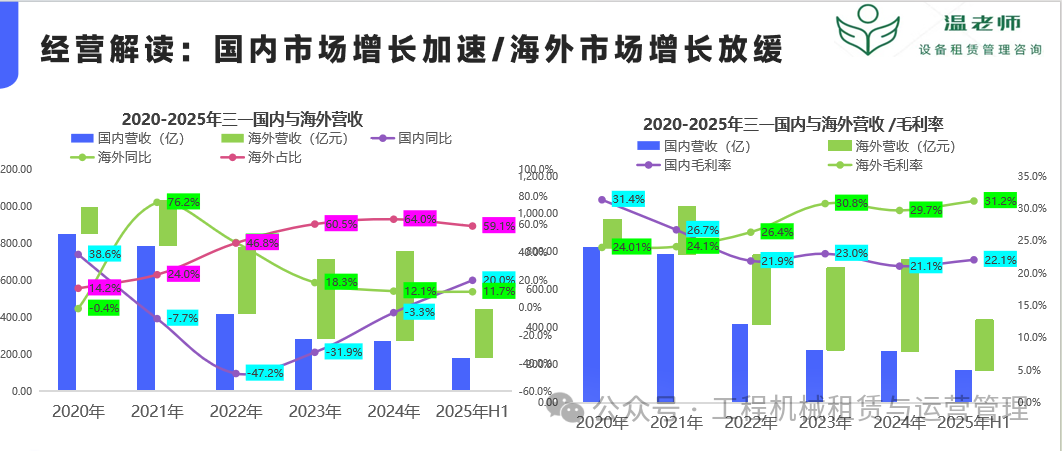
One of the biggest questions is why overseas dealers generate substantial profits from aftermarket services, while many Chinese dealers still rely almost entirely on selling new machines.
The numbers tell the story.
For Caterpillar, aftermarket business now contributes more than 50% of total revenue. By comparison, even leading Chinese manufacturers such as SANY have only recently increased aftermarket revenue to around 15%.
The fundamental difference lies in how the aftermarket is understood and developed.
Caterpillar begins planning its aftermarket strategy during the product design stage.
Through a closed-loop supply chain, engineers consider not only how an excavator or engine will perform when new, but also how it can be recovered, disassembled, remanufactured, and reused decades later.
This full lifecycle approach has made remanufacturing one of Caterpillar's most profitable businesses.
A remanufactured engine costs only about one-third as much to produce as a new one, yet can still be sold for approximately 30–40% of the price of a new engine, while reducing energy consumption by more than 80%.
Exclusive Caterpillar dealers benefit directly from this ecosystem. They earn revenue by collecting used components, supplying remanufactured parts, and providing maintenance services, creating strong incentives to invest in long-term customer support.
China faces almost the opposite situation.
For many years, the industry has prioritized equipment sales while placing relatively little emphasis on service.
There are also two major practical obstacles.
First, China's recycling and credit infrastructure remains underdeveloped.
Caterpillar's remanufacturing business is supported by a global network of 25 parts distribution centers and a highly efficient core return and exchange system capable of responding to customers worldwide within 48 hours.
China's recycling network is still fragmented, and many customers remain skeptical of remanufactured products, often viewing them as simply "refurbished" equipment. Combined with the absence of a fully developed legal framework, large-scale remanufacturing remains difficult.
Second, the distribution of profits between manufacturers and dealers is often unbalanced.
Many Chinese OEMs retain direct control over sales of high-value spare parts, leaving dealers to earn only labor charges from after-sales service. Unsurprisingly, dealers have little incentive to invest heavily in expanding service capabilities.
Admittedly, Chinese dealers are unlikely to replicate Caterpillar's highly integrated industrial ecosystem anytime soon, and China's Construction Machinery Market is fundamentally different from mature Western markets.
Nevertheless, there is an important lesson worth considering.
Europe and North America have also experienced price wars, fierce competition, and periods of market oversupply. Yet their dealer networks have generally managed to survive and evolve.
If China's industry can learn even part of that experience, it would be far more meaningful than continuing to rely on short-term measures that merely postpone deeper structural problems.
Conclusion
SANY's takeover of the Anhui and Henan markets should not be viewed as the "funeral" of the dealership model, but rather as a signal that the industry is entering a new phase of transformation.
The challenges facing dealers did not emerge overnight, and improving the dealership system will not happen overnight either. Likewise, closing the gap in aftermarket capabilities will require patience and sustained investment.
One thing, however, is becoming increasingly clear:
Whether manufacturers or dealers, long-term success will ultimately depend on returning to the industry's fundamental purpose—creating value for customers.
After all, with a Construction Machinery market worthRMB 1.2 trillion, there is ample room for outstanding manufacturers and outstanding dealers to thrive together.